
Category Archives: Essays
Roses in Winter

My mother appreciated East Sacramento flora more than anybody I know. When she came here as a young wife she said she marveled as she peered from the window of the taxi: trees everywhere. Then the flowers. She said to the driver, “My God, roses in winter?” He said, “Those are camellias, Miss. They’re everywhere.” She said that’s when she suspected she would love Sacramento, and that spring, when the trees came into full bloom and the bursting green made a shaded tunnel of 56th street, she said she thought she had landed in heaven. She was from St. Louis, a big city with bone cold winters and humid summers unsheltered by a sky crowded with elm and sycamore. She told us, “You kids are rich. Look around. You’re to the manor born.”
Being rich in trees and flowers, we largely took it for granted that we could skate and ride our bikes on lush storybook byways. When I was five we moved to 42nd St. and in the new back yard by the new hydrangea bush I began a tunnel to China. My mother greatly admired the hydrangea with its fat purplish flowers and when she came out to clip she stepped carefully over the hole to China. She said if she fell into the muddy tunnel, which was becoming impressively deep because I compelled my sister Moira to water it every fifteen minutes, she would present the people of China with a hydrangea. All people everywhere love beauty, she said.


In time I despaired of reaching China and announced that I would dig until I found buried treasure. Two mornings later the little hand shovel hit something. I pulled a strange mesh sack from the muddy earth. It was filled with coins, fifty cent pieces, quarters, dimes,–a cornucopia of silver. I ran yelling into the house, Moira toddling behind. I’d found three dollars and seventy-five cents worth of treasure, an astounding sum. Our mother said that Spanish Conquistadors had once inhabited this land, and probably they had buried the money. It didn’t occur to me to wonder why the Conquistadors didn’t leave Spanish coins. My mother said I should reward Moira for her help and fill up the hole so the hydrangea could grow in peace. It was a treasure too, she said, but no use to talk to my about hydrangeas when I had a fistful of silver.


We went to Sacred Heart School and sometime around the third grade we were enjoined by the nuns to solicit camellia donations from the nice people of East Sacramento. The camellias were used to decorate floats for the Camellia Parade. My mother walked with us to front yards gaudy with camellia bushes and waited while we knocked on doors and made our excited, extremely polite requests. People were uniformly agreeable. One lady with frizzy blond hair actually came out with a pair of clippers and helped us fill our bags, then chatted on the sidewalk with my mother. They talked about flowers. I remember the lady saying that she was from the desert and had grown up surrounded only by cactus and scorpions. It sparked my mother’s great laugh. She and the lady hit it off and we had to wait with our paper bags spilling with camellias while they went on and on. My mother said to the lady, “Our kids are growing up in a garden.”
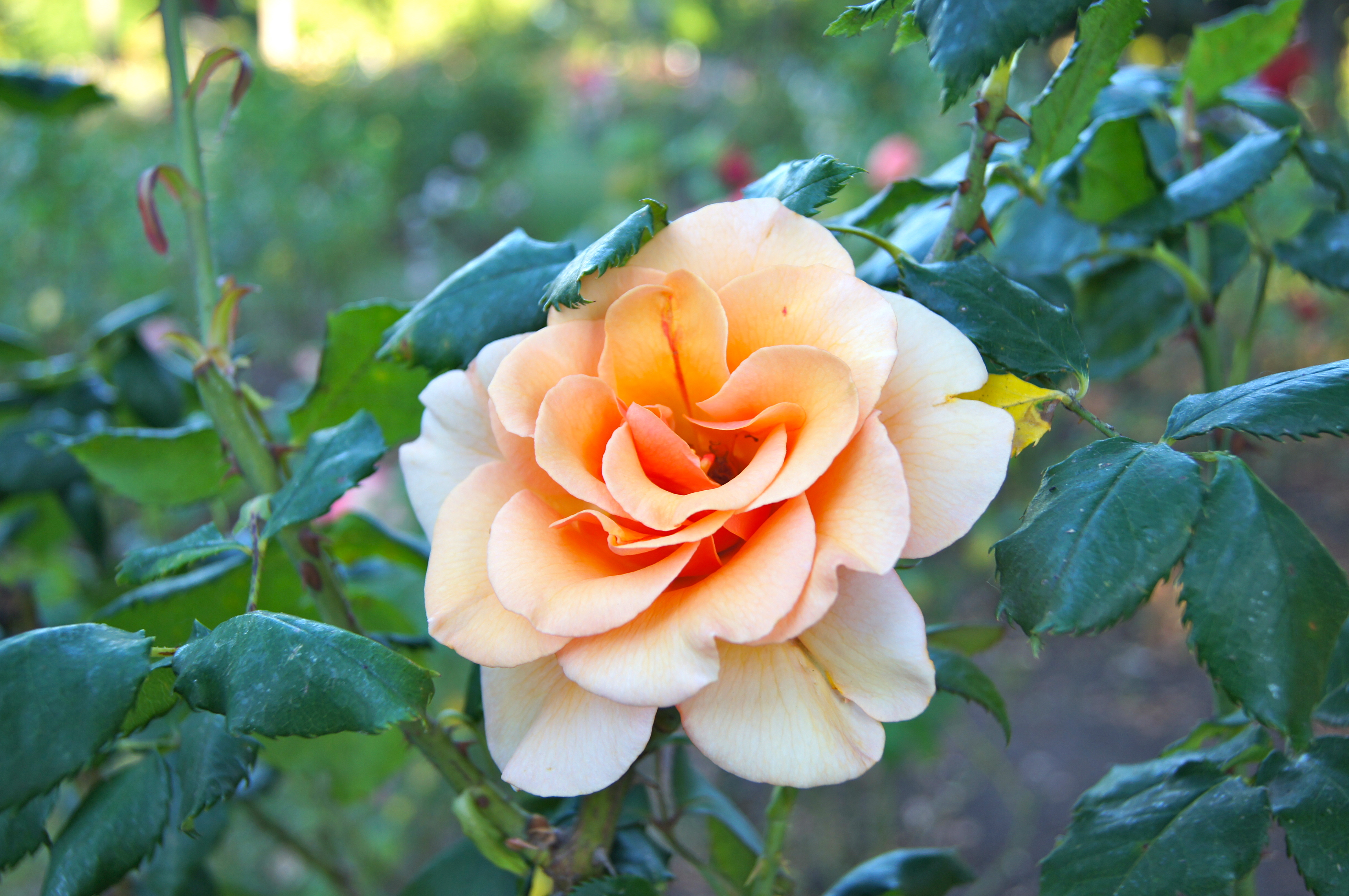
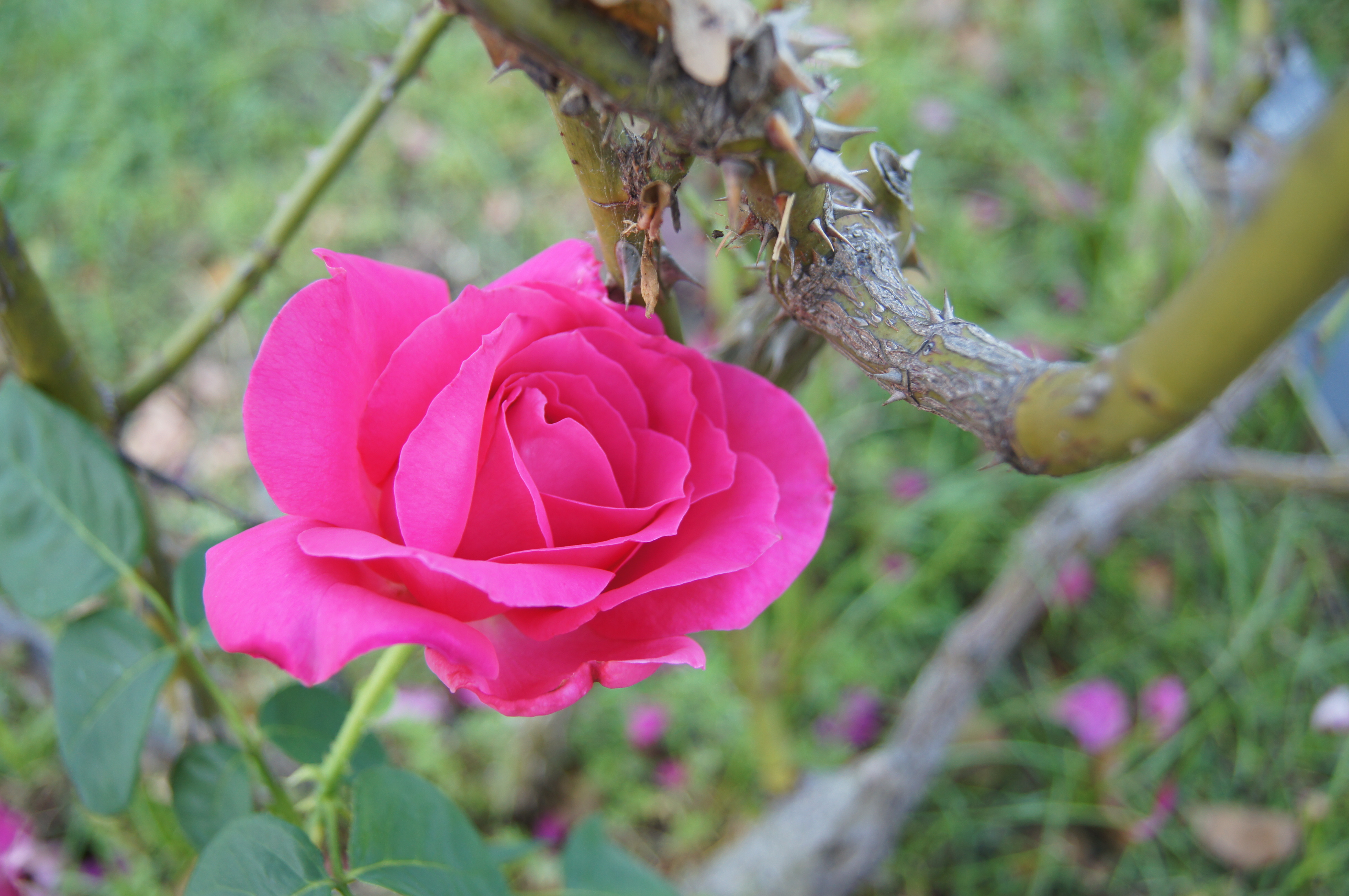
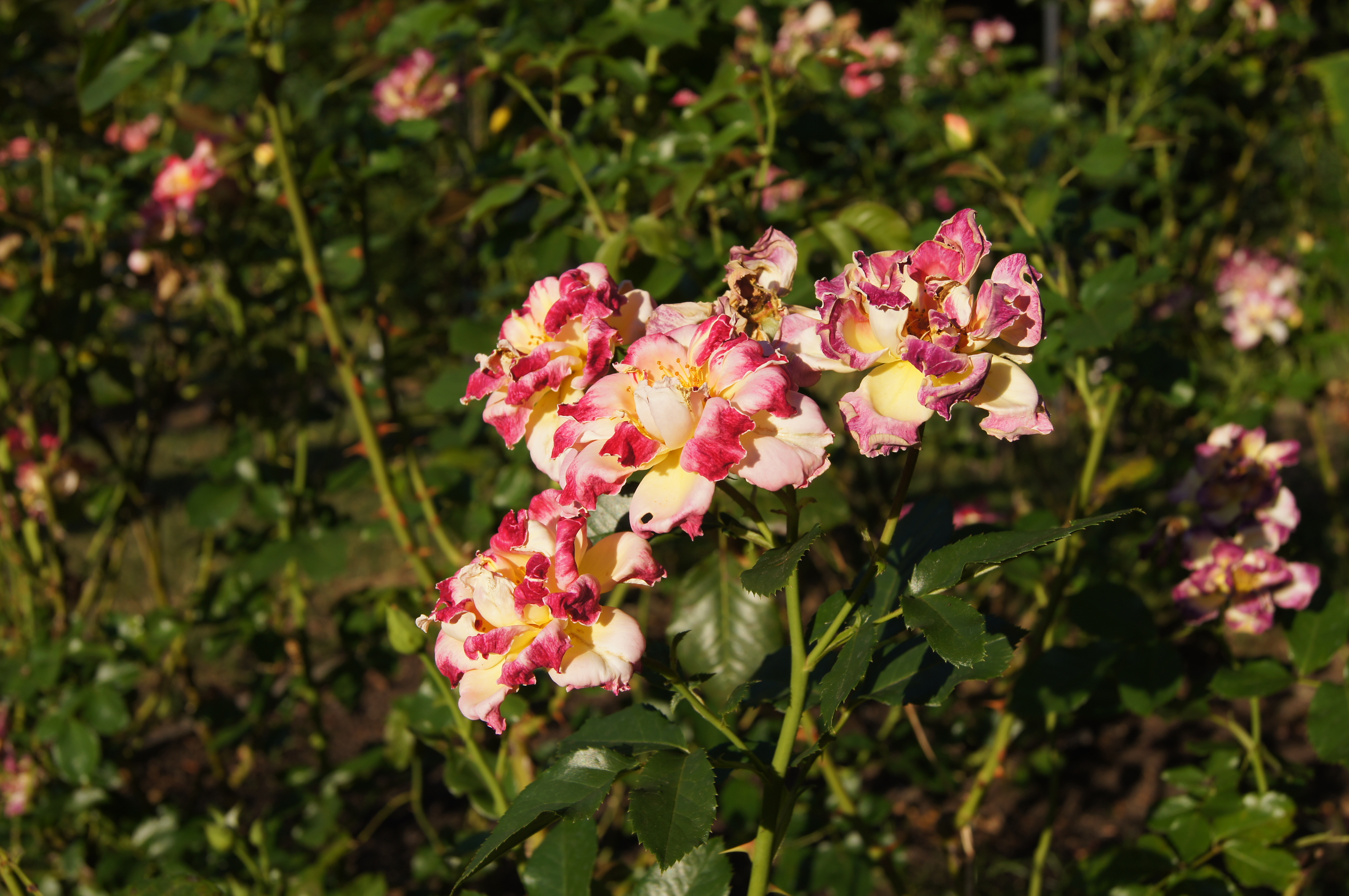
The true heart of Eden was eleven blocks from our house: McKinley Park with its roses. We went weekly to the library to check out books, but always paraded slowly through the roses first. I learned there existed a library of roses as well as books, a library catalogued by exotic names and histories. Some had scent, some had not. Some were one deep, solid color, some blushed at the tips. My mother loved them all. One day in the garden she called me over to look at a rose that was such a full, proud yellow it looked gold on its green stem. Even I, to the manor born, was struck. “This must be the king of the roses,” I said. My mother lifted up my littlest brother, Mike, so he could see. We always lingered in the rose garden; she never hurried us. She said you couldn’t spend too much time surrounded by natural, beautiful things.
When Eileen, our last, was born, we had to move to a bigger house in the suburbs. The first thing my mother did was plant roses in our new, treeless yard. Now, having been plucked from East Sacramento, I began to understand our loss. We couldn’t walk canopied streets to Frankie’s Drugs or the library. Smoking, noisy construction was everywhere. In place of parks we had dry fields crusting under the sun. We fenced in our yard and tried to make it an oasis of green, but one small oasis did not compensate for the endless dusty sprawl. Still, we made a good, boisterous life in the new place. My mother lived there thirty years: from there she launched each of us, cared for our father in his final sickness, welcomed grandchildren, presided over the tribe.
In 1985, having a slow recovery from an operation, she moved back to East Sacramento, into a mother-in-law cottage attached to the 43rd street house of Eileen and her husband, Jon. One of the first things our mother wanted was to get a new card from McKinley Library. I moved back into the neighborhood in 1986, also to 43rd street, and now Eileen, our mother and I were neighbors. We strolled through the Rose Garden again, this time at an infinitely slower pace, and Mom, silver-haired and smiling, studied the roses, smelled them, read the memorial dedications. One autumn evening, when she was seventy-nine, she, Eileen and I sat on one of the benches so she could rest. She looked around and took in a long breath. “Isn’t this perfect?” she said. “Aren’t we lucky, kids?”
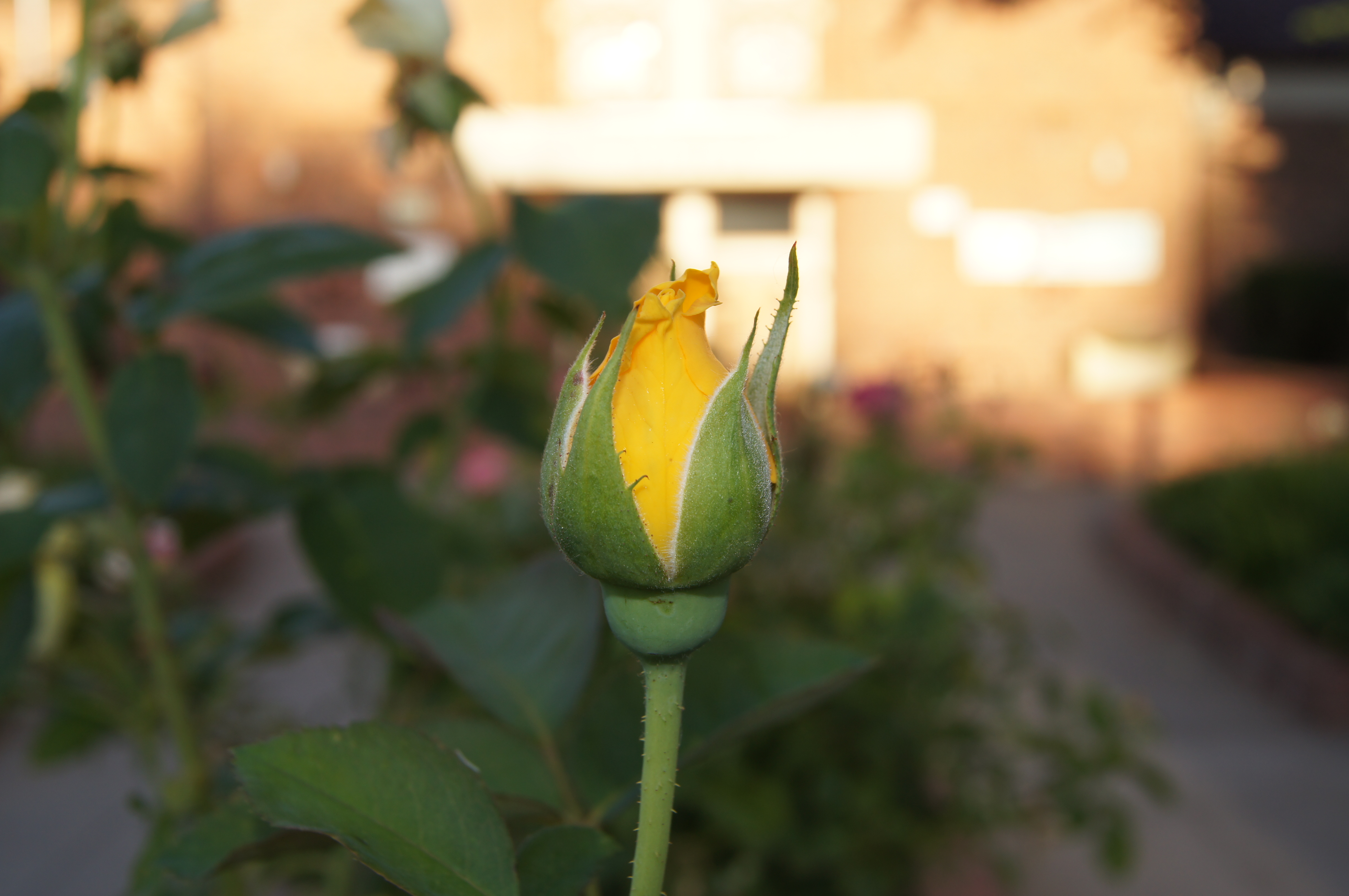
If you go to McKinley Library today, go along the front entrance and admire the two long brick planters of dedicated rose bushes and trees. Two of them are for her, a yellow bush, a yellow tree. If you go inside the library you can read the inscriptions on a plaque. Her name was Mary Kennedy Lynch.
Pat Lynch
Posted in Essays
Comments Off on Roses in Winter
East Sacramento Science is Alive
Little green creatures are terra-forming East Sacramento. They are not from Alpha Centauri and they don’t speak Martian, but they are members of a Green Team.
The small beings are students at Theodore Judah School. They dig, collect and process more than 50 pounds of compost and maintain multiple gardens on the elementary campus.
The Science Alive program at the school makes this all possible with the student Green Team.
-
- Science student
-

- A working lunch
-

- An eager learner
-

- Break time
-
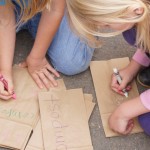
- Label design
-
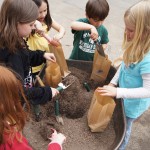
- Teamwork
-
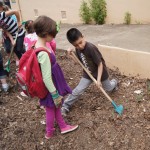
- Supervisor
-
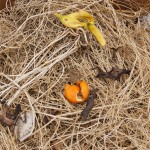
- Yuck to muck
-
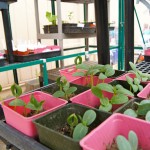
- Sprouts
-

- Biodegradable lunch trays
-
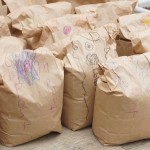
- Green Team compost for sale
-
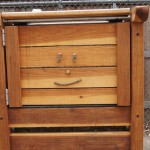
- Compost box
-
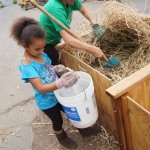
- Mixing it up
-
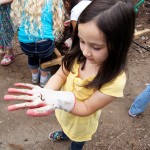
- It’s a worm!
-
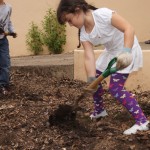
- Heave ho
-
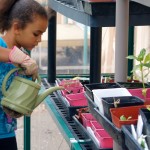
- Tender care
-
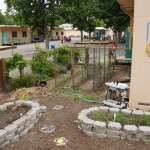
- A garden zone
-
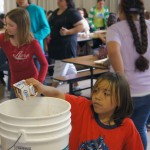
- Empty milk cartons mean less stink
-
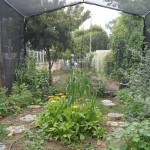
- Butterfly Pavilion
-
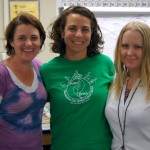
- Hardwicke, Milken and Marshall
Shannon Hardwicke is their fearless leader.
Hardwicke cultivated the program in 2008. The school’s principal approached her with a simple garden plan that grew and grew.
“Now we have a whole campus science and green program with a multi-zone garden,” Hardwicke said.
Hardwicke loves the mess of country life and so do the children.
“I have three kids at the school. This is the perfect place to work,” Hardwicke said.
Hardwicke is the only paid employee of the program. She receives a small salary from the school’s PTA. All the other adult coordinators are volunteers.
The program is a lunchtime optional class. Kids eat lunch and then hit the dirt. They are part of the school’s Green Team that works the land. It’s a commitment for the pint-sized farmers.
“It’s a lot for a seven year-old to give up lunch free time,” she said.
Hardwicke watches a batch of children chew, as they hurry eating so they can get to work.
“We started with just a few kids and now we have more that 45 students on the Team. At first it was just the elementary pupils. Today the primary, pre-kindergarten and pre-school are involved,” she said.
The pupils study science lessons and manage multiple stations in the operation. There are several vegetable plots, a compost operation, a green house, butterfly pavilion, and the students participate in a nationwide study.
Science Alive is also a pilot program for Sacramento City Unified School District.
Harvesting Dirt
A rangy girl with turned backwards, adult-sized gloves, (on the wrong hands, too) held up a wriggling line on her palm, “Look, it’s a worm!” she crowed. A smiling circle gathered to stare at the worm and then enthusiastically began to mine for more.
“Okay let’s put the worms back!” A volunteer gently steered the group back to work.
It’s dirt season and the kids love it. On a cool school day a cluster of pupils moved earth. They dug, sifted, and bagged pounds of fresh, rich compost.
Students labeled lunch bags with crayon and lined up the soil stuffed sacks on a table.
“This is harvest time. They’ve been prepping, turning, adding to and ripping biodegradable lunch trays for the compost all year. Now we’ll be selling it at a fundraiser,” Hardwick said.
Tap and Stack
“I guess you could call me a waste manager,” Yolanda Milken smiles.
Milken is one of the volunteer parents.
Garbage mounts up quickly at a school. Milken figured out a way to cut the pick up days and use more waste in the compost heap.
Students now empty milk cartons before throwing them away.
“With the milk out of the carton the garbage doesn’t stink. This cuts garbage pick up from five days a week down to two,” she says.
Each student also carefully taps food leftovers from their trays into a collection can. This is added to the compost.
Flight
Behind a group of portables, stands a tall, black mesh tent. This is the Butterfly Pavilion.
Monarchs and other types of butterflies are nursed here. The students raise the wild things from eggs, through babyhood to adults, and then release them.
The pollenizers help the kids complete the growing cycle and teach them about the circle of life.
Scientific Inquiry
A tripod with a mini solar panel crouches over a broccoli patch.
Science Alive was awarded $20,000 from Hidden Valley and selected to be one of five American schools to participate in an agricultural study.
A solar camera watches one section of the garden and the growth is measured and compared to four other student gardens across the country.
“We’ve had a slow start with the odd weather, but we’re still participating,” said Hardwicke.
The Classroom
One half of the project is practice and the other half is theory. The project’s science lab gives teachers a hands-on area to teach conservation principles and green technology.
Kindergarten teacher Audrey Marshall is a teacher-partner.
“I’m part of the Green Team. Several teachers and I bring students to the class,” she said.
The Community
“I never envisioned all this when we started. Our kids learn real science and conservation techniques,” said Hardwicke.
The Green Team is a group effort. Dozens of volunteer parents help at the school.
“The adults all work together and shuffle responsibilities to sustain the Green Team.” Hardwicke said.
The community also pitches in. Seland’s restaurant is one of the local waste-contributing vendors.
Compton’s Market hosts an annual fundraiser for the school. Students sell bags of super dirt (compost) to neighbors at the event and enjoy a festival with a BBQ and other fun activities.
The women have gone far beyond sustaining the Team. They’ve created a nationally recognized pilot program. They’ve got the ‘green’ stuff and they are growing.
2011 Theodore Judah Fundraiser and BBQ
When: Saturday June 11th 12:00 – 4:00
Where: Compton’s Market, 4055 McKinley Blvd.
Green Team organic compost for sale!
Food Games Music and a Raffle
Shop at Compton’s and support your favorite school.
Five percent of the store’s proceeds during the fundraiser will go to Theodore Judah.
Posted in Essays, Uncategorized
2 Comments
 Check Us Out On Facebook!