
Category Archives: Essays
East Sacramento’s Happy Tails Serves the Community
Tarzan
The longhaired, blue-eyed punk scaled a 30-foot tree and got himself stuck in the canopy for eight days. He made the evening news. A tree-trimming crew bagged the bad boy and rappelled him down. He then spent time in the pokey until Happy Tails bailed him out. With three of his nine lives ticked off, he is one lucky kitty.
Cats like Tarzan are “second chance cats” and they are Happy Tails Pet Sanctuary’s specialty.
Rescued from an uncertain fate at the Sacramento City Animal Shelter, he was brought to Happy Tails on Folsom Boulevard for a second chance at adoption. He was cleaned up, chipped, checked, vaccinated and neutered.
-
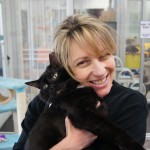
- Cathryn Rakich
-
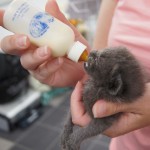
- Chow time
-
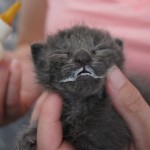
- Got milk?
-
- Happy paws
-
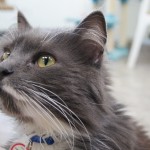
- Whiskerama
-
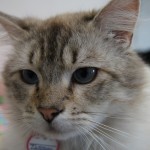
- Tarzan
Happy Tails always tries to help. “But first do everything you can to help us out,” says Cathryn Rakich, events coordinator. “Ask everyone if they’ll adopt the cat. Try to find the owner. People should know that we are bursting at the seams.”
Established in 1993, and located at 60th and Folsom Boulevard, the Sanctuary is a no-kill facility (all cats are kept until adoption or death, no euthanasia). An all-volunteer team of 300 people, with 50 foster homes, moves a continuing cycle of cats, like Tarzan, through a careful adoption system.
From cage cleaner to board member, there are no paid positions.
Volunteers can work from one to 20 hours a week. There are no set requirements for volunteers. People do what they can.
About 70% of the felines come from the Sacramento area community and about ten percent are rescued from other shelters. These are cats like Tarzan–lots of character and pizzazz that deserve a second chance.
Happy Tails also has an adoption partnership with Pet Smart. The store provides a holding room, bank of cages, food and litter for adoptees. The Happy Tails team maintains the location and shows animals for adoption Saturdays 10-4 and Sundays 11-5 at Arden and Watt.
Kitty out!
A brindled tabby squirmed quickly through an open condo door.
“Kitty out!” several volunteers shouted. The crew hustled to secure the middle and exterior doors to catch the escapee. Speed saved the day and the cat (with a surprised look on his face) was returned.
The Folsom Boulevard site includes exam and intake rooms, a sick bay and a triple secure door system: interior, middle and exterior door.
The residents aren’t kept comfortable in cages, instead there are seven glass walled enclosures, or condos, that divide different populations. One is for the more senior residents, two are for adults and four are for special needs cats.
Special needs include positive tests for cat leukemia, FIV, or social challenges and provides sick cats ‘assisted living’ until they’re back on their paws.
Every room is decorated with toys, cat trees and ample bedding. Cleaners keep the rooms clean and the cats are relaxed.
Kitten season
The saddest time of the year for cats may be spring.
“Traditional kitten season kicks in when the weather warms up,” Rakich said. “It used to be primarily May through July but now it runs late April through September.”
This is the time when unsprayed mom cats give birth to kits that are very hard to place in good homes. The cat population swells, as do deaths and abuse.
Happy Tails kittens are kept in foster homes. On the day this writer visited there was a wiggling carry bag on the floor.
“A homeless man found four abandoned kittens and put them on the conveyor belt at Pet Smart,” said Joelle McChesney, Adoption Center Coordinator. She gently poked a rubber nipple into a grey kitten’s protesting mouth. “These are young, maybe three weeks old.” McChesney will be a surrogate mom, feeding and loving the babies, until they are old enough to be put up for adoption.
The bag of kittens was on its way to a foster home because the sanctuary is not equipped for kitten needs. “Each kitten takes more than $100 to move through the adoption process,” said McChesney.
Life on the edge
Feral cats also fall under the protection of the shelter.
“We have two secret feral cat colonies in Sacramento,” said Rakich. “We practice catch and release – spay and neuter, and feeding. The sites are secret so people won’t dump cats near the area.”
“A hard life does not make a grumpy cat,” Rakich continued, stroking and hugging a chubby black tom named Bronco. He was moved into the sanctuary from the feral population. Purring and limp, Bronco carries a ragged neck scar from a collar that had grown into his skin. His frayed ears and nicks made him look like a hardened felon.
“We have to have thick skins,” said Rakich. “We never get used to (the cruelty). We want all cats to be safe, sound, nurtured and have a home to blossom in.”
We need help
Happy Tails needs any help Sacramento can offer, but it especially needs homes for the cats.
Potential adopters are screened carefully and some balk about the shelter’s no outside cat rule. All new owners must pledge to keep the cat indoors, no exceptions.
“It’s just safer for the cat,” says Rakich.
Rakich ponders the plight of the animals.
“People say it’s not their responsibility… I just found it… or I’m just helping to get it to the shelter… I believe it’s everyone’s responsibility to help these animals.”
By the way, Tarzan, the bad boy acrobat, he’s happy, fluffy, reformed and waiting at Happy Tails for a loving forever-family.
Action
You don’t need to adopt a cat to help. Happy Tails welcomes all kinds of support. Here are some ideas.
- Donations (any amount)
- Join the volunteer program
- Tell a student about the Junior Program for community service credit
- Donate goods, vehicles or make a bequest
- Come to the Barking Lot Sale May 21st 8-2 at 6001 Folsom Blvd.
- Visit the Kitten Adopt-A-Thon, Saturday June 18th 10-2, 30th and B streets
The website at www.happytails.org has complete details. All donations are tax deductible. Happy Tails is a 501(c)(3) non-profit organization.
Posted in Essays
Comments Off on East Sacramento’s Happy Tails Serves the Community
East Sacramento Preservation: Gypsy Memories
There is a gypsy curse known by an unlucky few as powerful and relentless.
“May you wander over the face of the earth forever, never sleep twice in the same bed, never drink water twice from the same well and never cross the same river twice in a year.”
Fortunately, for Alex Adams (1861-1917), the gypsy king, the curse held no sway during his life. This ruler lies in peace in East Sacramento’s East Lawn Cemetery. He is untroubled by malicious words or the evil eye. He is peacefully surrounded by scores of his relatives and ancestors, including his queen, Mary (1877-1934).
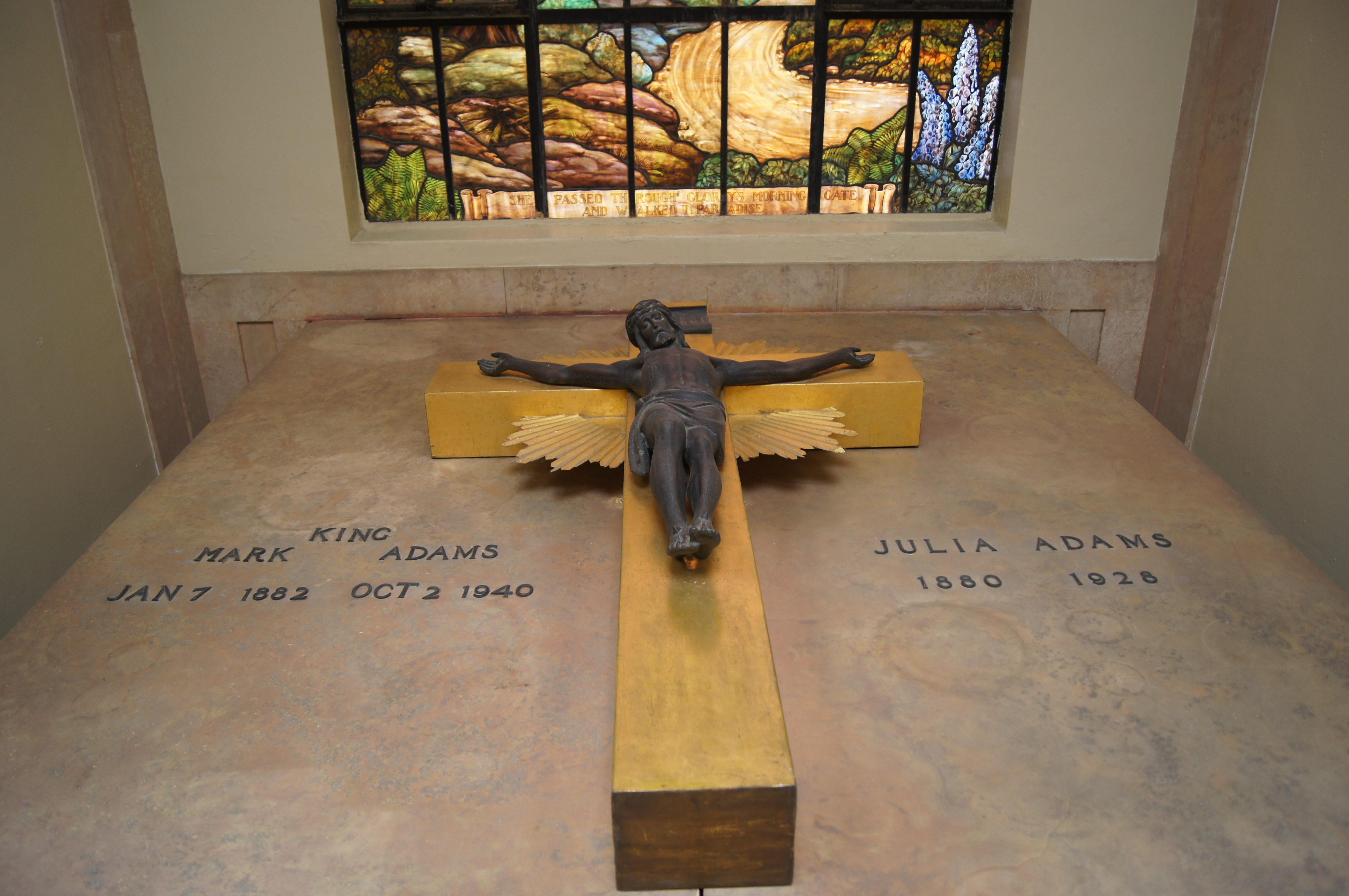
Adams family royalty
Unfortunately, though, there was one bump in the road. Early last century his grave was robbed. A large marble slab was pried off the tomb and valuables were taken. Police at the time believe the thieves were after items typically buried with gypsy leaders. His Queen Mary, had opened a purse and threw coins into the casket adding to the treasures.
East Lawn opened in 1904. The park has interred Sacramento notables and thousands of plain folk. The park occupies 40 acres in the heart of East Sacramento’s Fabulous Forties.
East Lawn has always welcomed all ethnicities, religions and cultural groups and the gypsy presence is active and growing. Most gypsies today are Christian, many are Orthodox, a nod to east European roots.
Wives, cousins, husbands, adopted children, uncles and aunts–the family trees of the East Lawn Gypsies are intertwined and nearly impossible for an outsider to figure out.
The term royalty is applied on merit more than heredity. Feats of familial support and service can lead to being called a chieftain, or king.
One thing is clear the gypsies embrace love during life and honor their dead in grand style, whether a king or peasant.
Gypsies are not shy and bury their dead with pomp and flourish. Funerals include feasting, music, laughter, crying and story telling and markers and mausoleums are substantial.
In mid last century one of the California Gypsy kings, Dushon John, was interned in East Lawn with style. The New York Times reported, “As the copper-lined coffin, blanketed in gardenias, carnations and sweet peas was lowered, token offerings of coins were deposited. Mr. John was buried also with such personal effects as a toothbrush, a mirror and hair oil for his journey into the future… a twelve piece band played dirges and the gypsies toasted with soft drinks and beer.”
Even today you can see a relics from the past. If you peek in the Millen Pavolovich mausoleum, another king, you will see a fashionable 1930s hat encased in a glass box. It was his favorite hat.
On a cool brisk day before Easter I walked through the park admiring the granite work and trees.
A caravan of late model cars began a slow drive from the front gate.
Well-dressed, middle aged people stepped out of the vehicles carrying bouquets of yellow roses, tulips, Easter baskets, spring motif balloons, bags of McDonald’s hamburgers and hot apple pies, wineglasses, beers, soda and cups of coffee.

Feast for the dead
The banquet was laid at the tomb of John and Lulie Uwnawich in the heart of the park’s gypsy region. But only after the tomb was tidied and a mantel of aluminum foil was laid as a tablecloth.
These gypsies came to celebrate the lives of their loved-ones.
Mary (no last name given) was happy to let me photograph the feast laid at the grave. “We come to remember. I don’t know if the next generation will do this, but we still celebrate the old ways.”
There was no grief in the faces of the family. Smiles and conversation filled the air. The group was happy to celebrate the memory of the dead.
Park Manager, Craig Peterson, admires the gypsies’ practices. “They celebrate lives. The park is considering the removal of part of a roadway to accommodate more family members. For the most part, they are buried in a common area.”
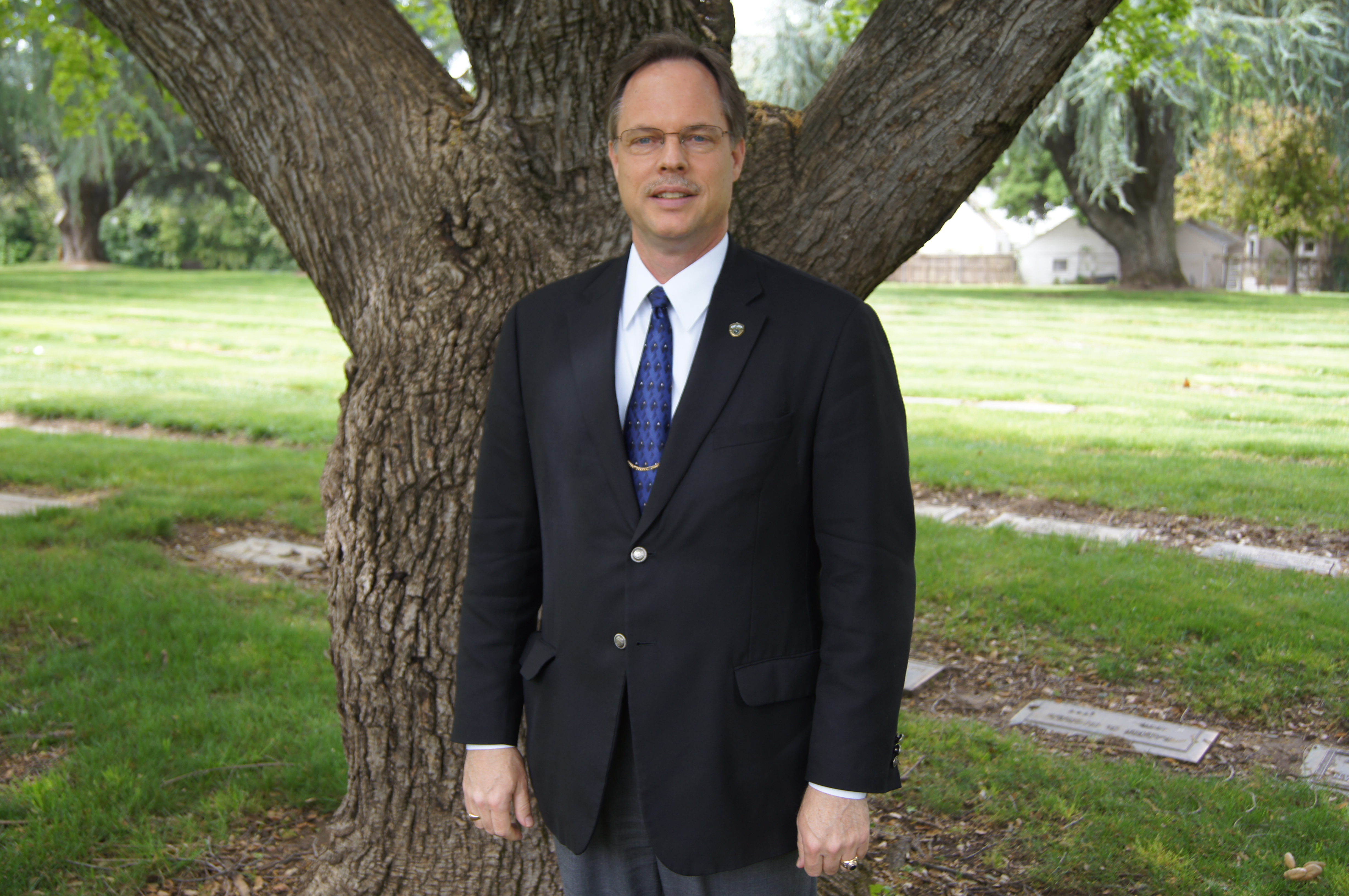
Craig Peterson, East Lawn Cemetery
I asked several of the party if I could take their picture. “No, honey, we don’t do that… no please, that’s not our way, not here,” they answered.
Who the gypsies are is often confused.
The gypsy people are believed to have emigrated from Northern India more than 1,000 years ago.
They are not of European heritage, and are not Romanian. However, the Diaspora did lead most of the group to Eastern Europe, with pockets of the population in France, Spain and England.
Intermarriage with locals and exposure to different cultures influenced the gypsies over time, but they remain a distinct group with their own practices, language and unique view of the world.
Historically, gypsies were heavily persecuted, at times with deadly consequences. They were often outside of the mainstream of society, living a nomadic life and relying on horsemanship skills, craftsmanship and fortune telling for income.
This independent living drew the suspicions of locals and the gypsies were frequently attacked and used as scapegoats.
And some of the gypsies did engage in criminal behavior.
During World War II gypsies suffered further attacks from Adolf Hitler and the Nazi racial extermination policies. Tens of thousands of gypsies perished in concentration camps, primarily in Auschwitz.
Emigration to the US began in earnest during the Eastern European waves of the early 1900s, primarily from south-eastern Europe
On the spring day I observed them there was no fortune telling, no bangles or jewels. There was love and honor, a proud people remembering the dead.
Posted in Essays
3 Comments
 Check Us Out On Facebook!