
Category Archives: Essays
East Sacramento Summer
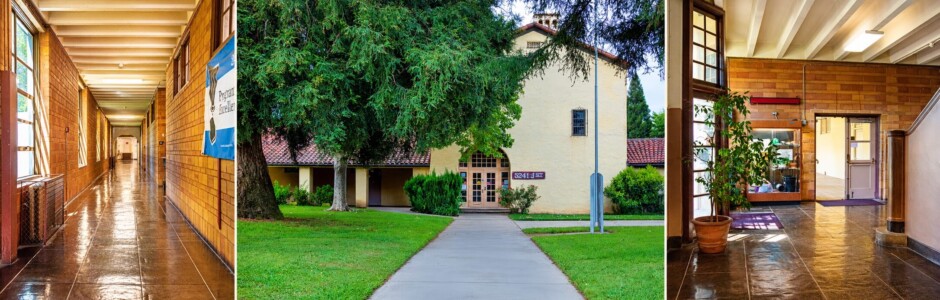
 It was a warm June afternoon when I first saw the boy. He must have been seven years old and he walked sedately from the gate at the old Sacred Heart School. When he reached a waiting Volvo he stopped, threw his arms into the air and twirled. He did a little dance out there on the hot sidewalk and it stopped me, charmed me. I knew what I was seeing, and I saw another kid there in his dance, a girl from a long time ago, who wore pigtails and walked primly until there wasn’t a nun in sight, then burst into flight, and raced down the elm and sycamore shade of H street into a perpetuity of freedom–a Sacramento summer.
What a luxury, those big summers. The long days fattened, bestowed time to ride bikes and roller skate and build forts in the empty lot 42nd and D. It was all about time, an infinity of cool mornings and those drowsing afternoons tumbling gently, no end in sight, freedom sprawling forever. I remember that the girl turned her calendar against the wall so she wouldn’t have to be reminded of September, and told her mother, “I’m so happy I might burst into fragments.” And her mother, a redhead who did not like summer, who wore a floppy sunbonnet and gloves when hanging clothes in the back yard, would not dilute the girl’s rapture, and said, always, “Yes, this is going to be a long one.”
I saw the boy again a year later. July. He sat at a table in the kid’s section of McKinley Library, turning the pages of a tall, outer-space pop-up book. There was a stillness about him and his dark hair drooped over one eye. His absorption in the book recalled the girl again, padding barefoot to this very library, her card clutched in her hand, half skipping, crossing the streets on the white lines which didn’t sting like the boiling asphalt. McKinley Library was salvation. Because by mid July the afternoons hung long and heavy in the dead air. The adults all said the same thing–at least it’s a dry heat. But it was cool in the library and there lay a world of promise. She’d go home and read the afternoons away, sometimes in the top bunk with a mound of red grapes on her chest, sometimes in a special perch in the apricot tree in the back yard. School was out but books were in. And this wasn’t reading for pleasure, this was reading for joy–Zane Gray, Louisa May Alcott, the Nancy Drew mysteries, and when she got older, Charles Dickens and Mark Twain. The boy is growing up to different summers, with TV and the Internet, but there he was in the library the next year also, and the year after, so somebody was making sure he didn’t miss the adventure.
One year I saw a lot of him. He was learning to skateboard and one sweet, delta-breeze night at Pops in the Park he took a tumble. One of the people who ran to him was the woman who waited for him in the Volvo that first day at Sacred Heart.
I went one August afternoon to the farmers market with a widely traveled friend. He said that Sacramentans live in a paradise of backyard gardens and fruit trees, and described how he had once waited in a Warsaw Pact country for two hours to pay the equivalent of $30.00 for 5 lbs of scrawny bananas. “You have this productive soil here,” he said. “You’re a fertile crescent. You’ve got your two big rivers, your Mediterranean climate. You’re rich.” The woman next to us turned around and said, “Yes. We are,” and I recognized her–the boy’s mother. So now we got to meet and have a neighborly chat and I learned that the boy was on a swim team, lounged in the hammock with his laptop most afternoons after practice, was destined for the McClatchy High School HISP program, was a good kid, still read books, and not just Harry Potter.
The next year I saw him hanging out with friends by the golden bears at the State Fair. It was a muggy, September twilight that made everyone pine for the old dry heat. He was taller than I now, wore trendy shades, chugged down a Gatorade, talked to girls. He gave me a slight nod. I passed through the turnstile and indulged in a feast of recollections that included, of course, a particular girl’s first non-family trip to the fair. She had become cool that particular summer, too cool to go places with her parents, too cool for cotton candy, too cool to show enthusiasm. And way too cool to admit that she missed the way her mother loved the flower show and her father marveled at the gargantuan Clydesdale horses that trotted by the Counties building. That was the long hot summer of coolness, hard on everybody.
I don’t see the boy anymore. He’s a young man now, gone away to college in the Bay Area. I wonder if he likes the weather there, the fog, the overcast. Probably he does. It’s brisk and exhilarating. But I’m guessing that now and then he might look out a dorm window on a chill day and wish for a moment to be somewhere else, back in time, back in that hammock maybe, in swim trunks and sun block, swaying lazily, his book on the grass beneath him, his eyes closing, the Sacramento day going on forever.
Pat Lynch
East Sacramento’s Cookie’s Drive-in Roo-Ostrich-Buffalo Trifecta
In Australia they call them Kangatarians—people who eat kangaroo exclusively. Such a person in East Sacramento would need to know about Cookies. The East Sacramento drive-in and “institution” has gone wild and now serves ostrich, buffalo and kangaroo meat burgers.
Lean diet advocates have long touted the health benefits of game meat. Compared to its beef cousins it wins the low fat contest.
But kangaroo?
Will Americans warm to ‘Skippy’ and other game burgers? Are they soon to be in the meat sections, or will they remain a culinary oddity?
The Test
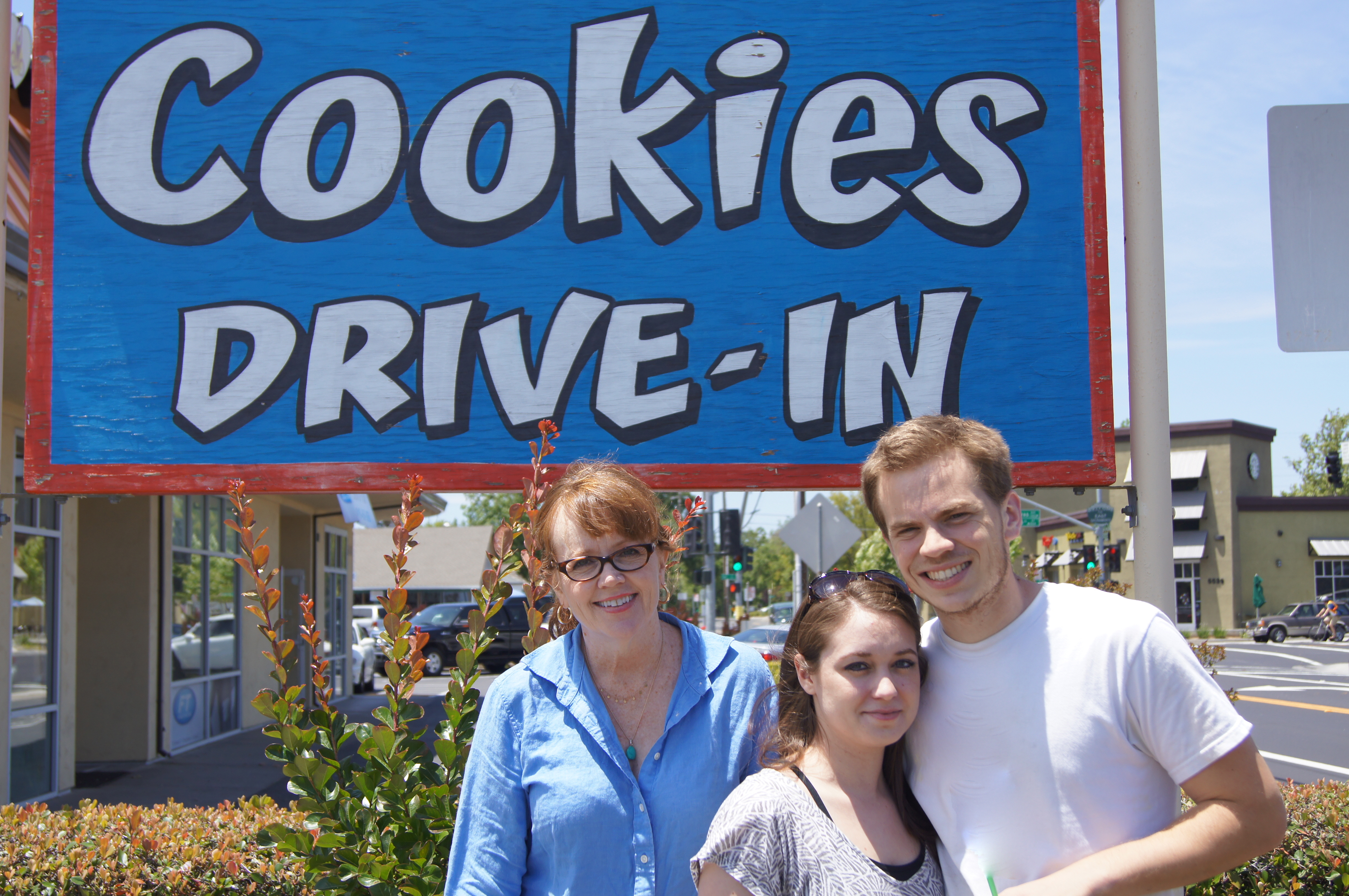
On a warm Sacramento afternoon East Sacramento News conducted a scientificish test. Three average East Sacramentans were ready to try the wild burgers.
- Eileen Lynch, Tessa Stoddard and Jon Lynch-Lloyd
Each subject volunteered to taste ostrich, kangaroo and buffalo. All of the meat was humanly raised or harvested. They cringed at the inclusion of kangaroo, but gamely acquiesced.
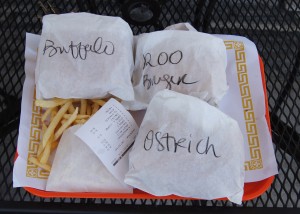
- The order
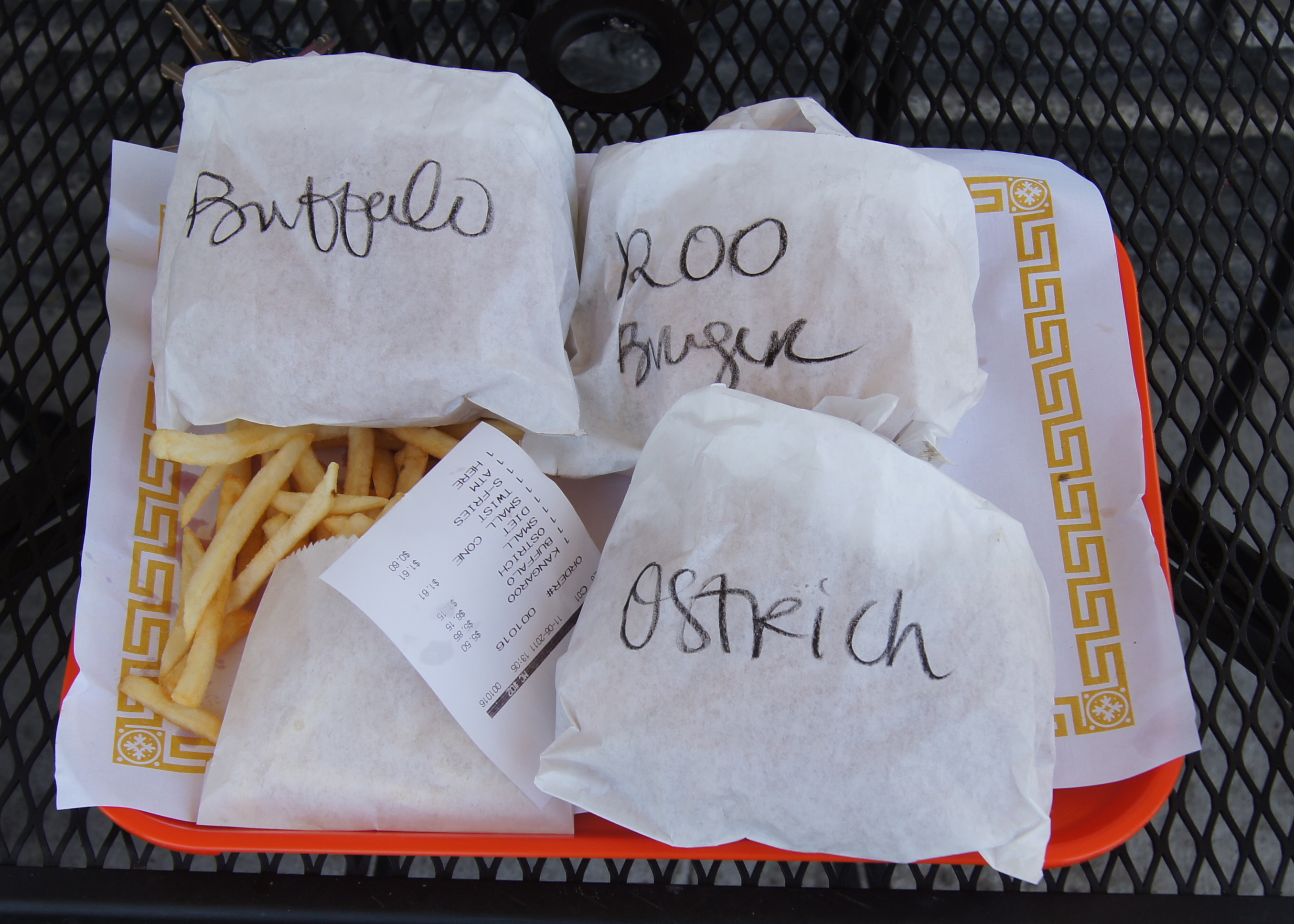
The test subjects were Jon Lynch-Lloyd, Tessa Stoddard and Eileen Lynch. They would rank the burgers according to texture and taste.
The “control group” was Pat Lynch, Eileen’s sister. She was supposed to eat the beef burger, but instead licked a soft serve. “I know the burgers are delicious,” she said. “You can’t pay me enough to eat a kangaroo.”
Finally, three generous burgers were served up. The group eyed the choices with raised eyebrows.
Each guinea pig smelled the burgers, inspected them visually and then started with the buffalo. They cocked their heads, breathed deeply and began.
- Lynch prepares to bite
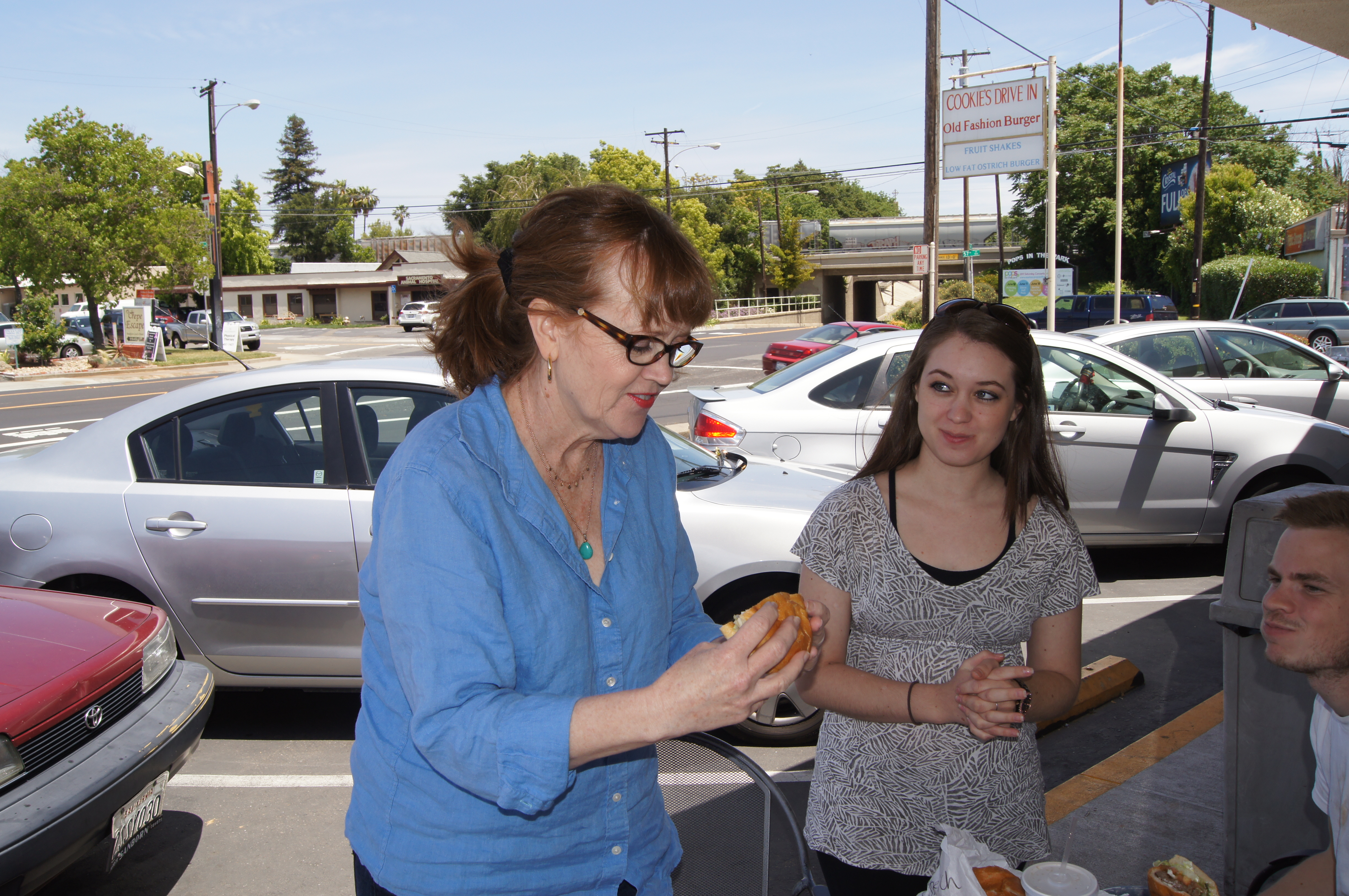
The trio silently nibbled the bison. Eileen Lynch grimaced and said, “I can’t think about what it looks like, when I do it’s weird.”
Next was the ostrich. Tessa Stoddard gazed at the burger, bit and swallowed a morsel. She frowned. “It looks less appetizing. It’s smoother than other meats,” she said.
Buffalo meat is processed in the same way as beef and looks very similar. But ostrich is another story. Most of the meat comes from the thigh and it’s reddish in color, even after cooking.
The roos were last. The burger warriors were most reluctant to sample the marsupial but each gingerly noshed a bite.
- Kangaroo bites
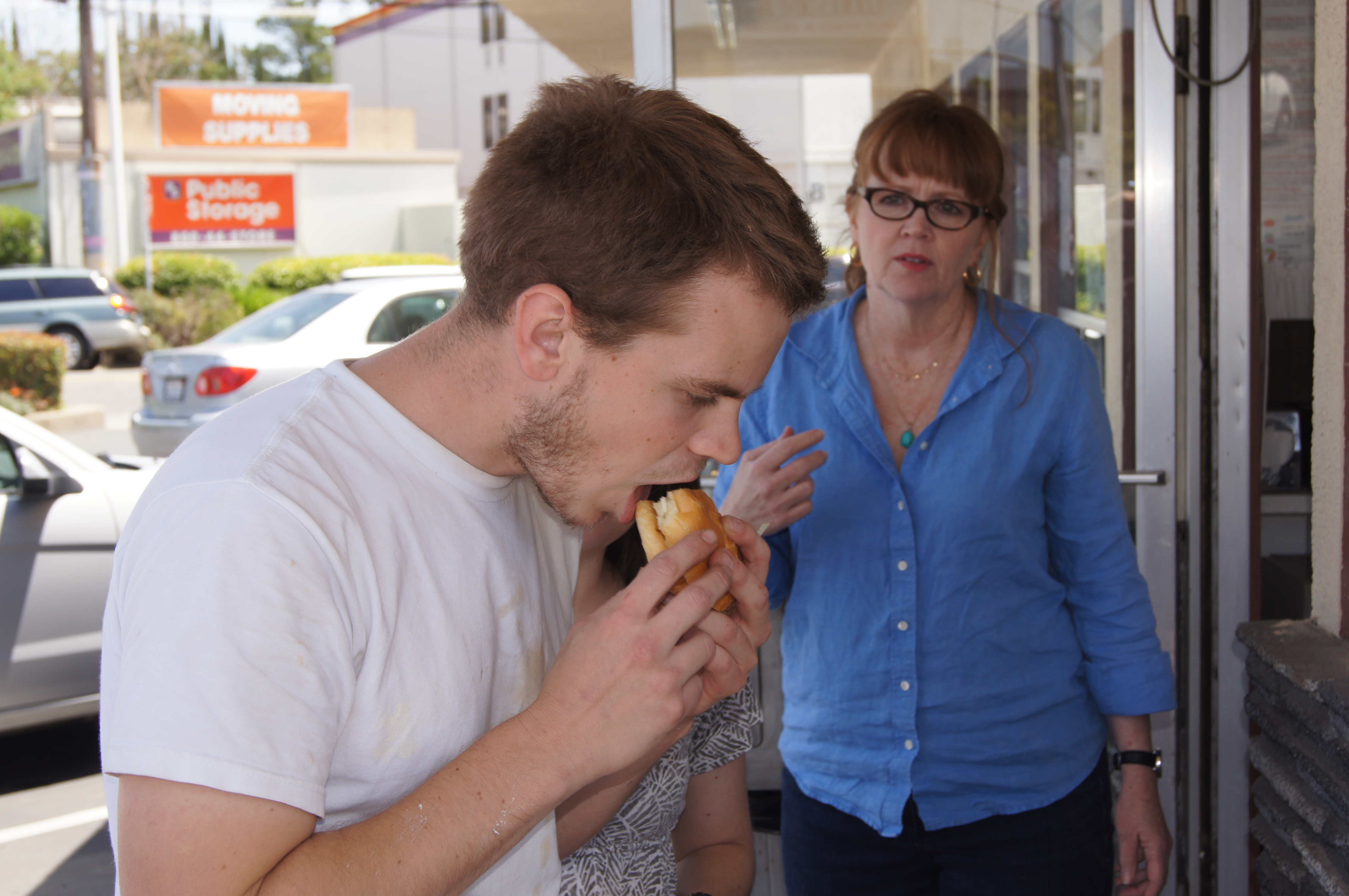
“What does a kangaroo really look like?” Asked Lynch-Lloyd. He pulled out his iPhone and googled kangaroo. A giant Red Kangaroo peered from the screen.
“Okay, but where does the meat come from on it?” Lynch-Lloyd eyed the tail and paws suspiciously. The concept was difficult to digest.
What he didn’t know is that there are 48 known species of kangaroo, but only four are harvested for meat. The roos are culled from the wild or large privately owned ranges. There are no kangaroo farms, barns or pens. The meat is portioned much like beef and Australia exports the meat around the world.
The Winners and Losers
The three conferred and unanimously agreed on the ranking.
- Buffalo
- Kangaroo
- Ostrich
All acknowledged the superiority of game’s nutritional value, but wanted to stick to beef.
“Yeah, it’s good they serve this meat, said Lynch-Lloyd. “There’s such a disconnect between the food we eat and where it comes from. Wild game makes you think more about what you eat; that it’s a living creature.”
The buffalo was very similar to beef with a richer flavor and slightly smokier. “I could easily order a buffalo burger,” said Eileen Lynch.
Pat Lynch stayed out of the fray, licking and watching.
“I would never eat game, but this cone was harvested from a wild glacier of soft serve.” She smiled and popped the end of her cone into her mouth.
All three said that none of the game burgers came even close to Cookie’s high quality, sizzling beef burgers.
Cookie’s
American drive-ins are cultural icons and Cookie’s is one of the front -runners. So why would the owners dive into the exotic meat market?
- Stella Chuk and Paul Chuk on the grill
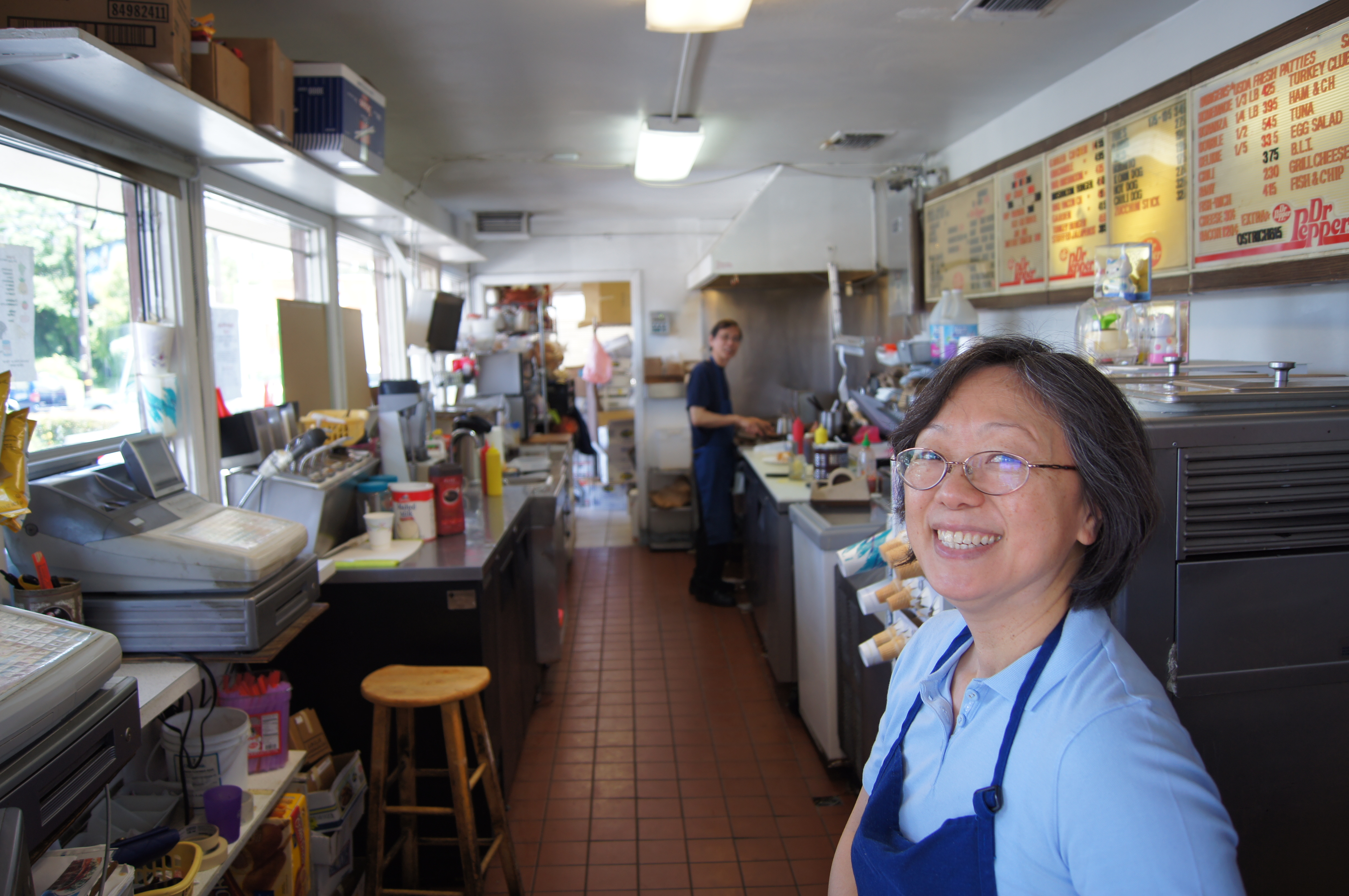
Paul and Stella Chuk have owned Cookies restaurant for 25 years. They live in the Pocket and commute to 56th and H Streets six days a week. The drive-in was named after the wife of the first owner who started the neighborhood favorite in 1956.
The Chuk kids, Joyce and Jesse, grew up behind the counter and still help out in the restaurant.
“I grew up at Cookie’s. My mom even came to work when she was pregnant with me,” said Joyce Chuk.
Paul still flips the burgers and Stella now works part-time time. They loved the original drive-in menu but decided to add healthier choices.
“We added ostrich first because a customer requested it. The others came later, all by customer request. They all sell very well but the best-seller is the ostrich,” Stella Chuk said.
“Our nice customers wanted more variety. Many people enjoy wild game. It took a while for the meat to take off, but now it’s popular.”
There are not many local eateries that have the Roo-Ostrich-Buffalo trifecta. If you want to walk on the wild side or just want good ‘ole American drive-in grub, Cookie’s is the place.
Posted in Essays
Comments Off on East Sacramento’s Cookie’s Drive-in Roo-Ostrich-Buffalo Trifecta
 Check Us Out On Facebook!