

Category Archives: Essays
Locks of Judgment
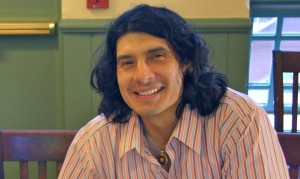
Two years ago, I decided to grow my hair and donate it to Locks of Love––a non-profit organization that makes wigs for cancer patients, both women and children. I knew that cancer patients experience hair loss during treatment. My older sister, in fact, lost all her hair during chemotherapy. She looked like a completely different person. I missed seeing her beautiful black curly hair. For many years, unaware that I could help, I had been throwing away my hair. Why not donate it to make a wig, instead, and bring some joy to someone suffering? The decision brought me unexpected physical and emotional experiences.
I know that human beings are visual and everywhere we go we judge people by their appearance, whether we are consciously aware, or not. But could it be possible to judge a man by the length of his hair? As my hair was beginning to grow longer, my family’s statements were: “When are you getting a hair-cut?” or “Aren’t you going to comb your hair before we go out?” A very close friend even gifted me barrettes for holding my hair in place. Obviously, they did not approve of my new look. I knew, then, that I was in for a long ride.
At work, co-workers I highly respected often would make disrespectful comments like “Hey, Hippie, get a job!” “Your hair looks terrible; get a haircut!” Even those who knew my intentions would remind me that the long hair needed to go because I no longer look “manly” or “handsome.”
While visiting Arizona, a close friend of the family said to me, jokingly, that I looked ‘like hell’ and that I should be ‘taken south of the border’ to get an inexpensive haircut. At times, I perceived the cruel comments as racial statements or a good laugh at my expense. Nevertheless, I tried to remain grounded and self-contained. Deep inside, I knew my good intention would prevail.
At times, I wanted to give up, not because of the negative comments, but the annoyance of the hair on my face. For a while it wasn’t long enough to put in a ponytail. Simply keeping it in place when exercising was a problem. Forget trying to control it on windy days. Also, the care and grooming of long hair became a daily chore. As a result, I learned to admire and respect those who choose to have styled, lengthy locks of hair.
A handful of people were understanding and supported my efforts. Some commended me for the cause or shared a story of someone they knew had donated hair at one time. A few shared their personal stories. One day, on the elevator at work, a young woman told me that her mother was dying of cancer and that there was nothing she could do. I witnessed the tears running down her face. I could do something for someone like her; the hair falling on my shoulders provided the evidence.
I was determined to follow my heart. I heard the calling to donate my hair and help someone in need. I thought it would be easy to give a part of myself, but I never imagined that people could be so insensitive, unkind and judgmental.
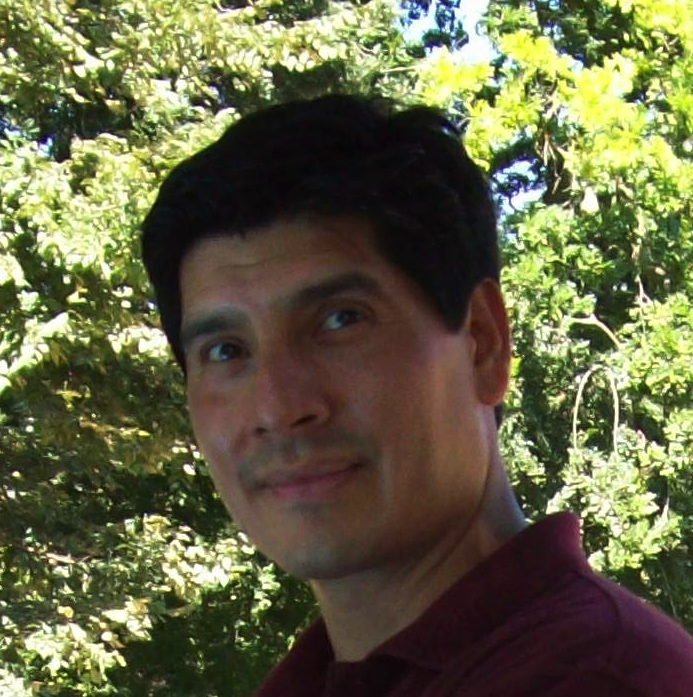
Contact Locks of Love or Pantene Beautiful Lengths to learn how you can contribute.
Posted in Essays
4 Comments
Citizens
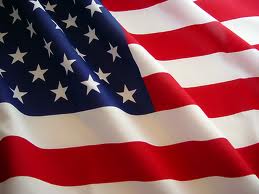
Everywhere you see the bunting and flags—East Sacramento prepping for the Fourth. When we were kids on 42nd and D there was no grand parade but the holiday was rollicking then too. Our father brought home little flags from McClellan and we marched around with them singing Yankee Doodle. In the evenings our mother read enthralling poems to us—Paul Revere’s Ride, Flanders Fields. She said we were patriots. She said her father, born in occupied Ireland, loved the USA, and so did she. She said our Dad, his brother and her two brothers had all fought for America, for us, and it was our duty to grow up to be good citizens. We said, why can’t we be citizens now, and she said we were, little ones, the little citizens of Forty-second Street.
One year a man and woman moved into the small house on the corner and immediately installed in their front yard a prodigious flagpole. My father said maybe they thought they were the City Hall, and my mother said, “Maybe they think they’re the Post Office.” For some reason this got my parents laughing. On Memorial Day the new couple raised an enormous flag that seemed to dwarf their modest craftsman. By now the man was frequently seen on the street wearing a jacket festooned with military medals. It wasn’t a military jacket, simply a light windbreaker dragging heavily on the left where the medals had been affixed. My father chatted with him one evening and reported that he was a retired army vet who operated a short wave radio in his basement and was on the alert for Communists. I didn’t know what Communists were but they seemed thrilling. My mother said they were just people, like us, but were misguided.
The man’s name was Carl but his wife, Elsa, called him Captain. My father thought there was something wrong with someone who wore his medals on civilian clothes and my mother said it was ridiculous but it took all kinds.
On the Fourth we had the usual dizzy blur of hotdogs, wading pools and running around in the sun, and by the six o’clock block barbecue we were wild with excitement and exhaustion. Captain Carl taught us how to salute his giant flag. “You have to respect the colors,” he said. “Remember that.” Later Captain Carl told my mother that Mrs. Gleason, a retired teacher on the other corner, a widow, was a red. I had never seen my mother get mad at another adult but she folded her arms and said sternly, “Mary Gleason is no more red than I am.” I ran to my sister, Kathleen, and told her that Mom was getting Captain Carl in trouble. We raced back to the excitement. By now a group had formed and Captain Carl said anybody, even the most innocent looking, could be a red.
A red. Mrs. Gleason sat in a little canvass chair by the Toniola’s lawn. She had white hair, white eyebrows, white skin, a white blouse and pale blue pedal pushers. She wore straw colored sandals. The only red thing about her was the little flag in her lapel. Kathleen said, “She’s not red. Even her lipstick wore off.”
The adults became increasingly agitated, with the majority coming stoutly to Mrs. Gleason’s defense. By the time we tumbled into our cars and went in a caravan to watch the fireworks from the old fairgrounds, most of the grown-ups were irate about Captain Carl. When we went home my father, Mr. Gibson, and portly Mr. Carr went over to the Captain’s house, having decided, while drinking their beers, to upbraid the Captain for besmirching Mrs. Gleason’s reputation.
When my father returned he told my mother that the Captain answered the door in his robe, the medals now pinned on it. My mother went into one of her long laughing fits. My father said, “Can you believe it? The g.d.s.o.b. had the g.d.b.s. things on his robe.” Whenever we were listening my father tried to swear in initials. He added that the g.d.s.o.b. was a Sergeant, not a Captain.
What was a red? I pestered the answer from my parents. Reds were belligerent Communists, who wanted to conquer us, but we were not to worry; Eisenhower wouldn’t let them. I couldn’t grasp how Mrs. Gleason, who lived on 42nd street in Sacramento, and painted water colors of sunflowers, could want to conquer us, or why.
The Captain moved the next year and subsequent Fourths were harmonious. My mother continued to read poems to us, adding The Patriot by Browning, Liberty by James Whitcomb Riley, and many more as we grew older and were at last able to sit still for Gilbert Keith Chesterton. Mrs. Gleason died at 92 and no Communist banners were unfurled during her quiet service at a Methodist church.
When the little citizens of 42rd street came of age our patriotism evolved differently from that of our parents. In college I participated willingly in anti-Vietnam protests; my brother Danny enlisted in the Navy, was stationed in Da Nang. When he came home he joined the Vietnam Vets Against the War. Many people disapproved of these actions—the Captain surely among the outraged––but our parents listened to us, and stood by us. My father, who had served in the Pacific theater in WWII, had a small flagpole suspended over the porch and when Martin Luther King was killed, he put the flag at half-staff. He did the same when Bobby Kennedy was shot. Thereafter he flew it on Memorial Day, Flag Day, The Fourth, Veterans Day—all the apt occasions.
Much later came a presidential election where flag protocol became a furious issue. Some argued that we should be obligated to pledge allegience and salute. I asked my mother what she thought of all this. She said if Germans hadn’t saluted the Swastika they probably would have been shot. Same for the Russians with the hammer and sickle. “But you can do as you like with our flag,” she said. “And ours is still flying.” I told her she made a great point. She said, “It’s what your father believed.”
This Fourth I will display a large flag. It’s the memorial flag presented to my mother when my father died. I display it for the man who earned it in war, the woman who appreciated its worth, and their children, who inherited and exercise the freedoms for which it stands.
Pat Lynch
Posted in Essays, Uncategorized
7 Comments
 Check Us Out On Facebook!