
Category Archives: Essays
East Sacramento Helps Return Pollux
When I saw the dog-lost poster in the window of Cookies I was struck by its size and excellent color picture. This was someone who desperately wanted her dog back. The owner offered $1,000 for the brown, sad-eyed dog staring out of the poster.
ESP doesn’t typically post lost animal information, but something about this plea tugged at me… why not post it?
I called the owner and got the information. I ran the post with no luck and thought the little guy was gone for good.
Then a few weeks later this little dog was found! He was emaciated, terrified and wouldn’t have made it much longer, but he was saved.

Pollux after rescue
The owners have allowed me to share their story:
After 4 weeks of searching every day, early mornings, lunch breaks, late nights, talking with almost every person I passed on the street, handing out and posting over 1,500 flyers, hiring a pet detective and asking people to post on every social network in their area, it came down to a few sightings. We had to get the word out because we don’t live in the area and Pollux seemed to be hiding so the chances of us finding him, while we were out there searching, was slim. I went into almost every business in East Sac and eventually, every person I spoke with already knew about “missing Pollux.”
We got a call on Oct 14th from a nurse at Sutter who, on her way to work, saw Pollux try to run across the Elvas overpass near 57th. We then concentrated the search to that area, which included the RR tracks. We combed the area extensively, day and night, but could not find him. We knew he would primarily be hiding so it was going to be a matter of finding his hiding spot, while he was in it. There wasn’t another real sighting until Oct 21st but the call came to us a week after he’d been seen. Again, it was around the RR tracks, behind the River Park homes, near 57th. My husband and I went back out with the scent hounds and tracker we had hired and placed large animal traps in the area.
Still no luck.
Then on Nov 5th, we got a call at 9pm from Chuck, an East Sac resident, whom we befriended, during the whole process, who had been searching for Pollux daily. He said he had just seen our little guy on the east side of the RR tracks, near F St and Elvas! Chuck heard the jingle of Pollux’s collar and shown his flashlight in that direction until spotting the tiny dog, chewing on an empty milk carton at the bottom of the levee. Pollux looked up at Chuck then ran off, crossing over the tracks and disappearing into the night. My husband and I drove out there immediately after getting the call, and searched for hours. Before calling it a night, we moved both of our traps to the exact location Pollux was seen.
Tuesday, Nov 6th, Election Day, I woke up early and headed to East Sac to check the traps. I walked along the RR tracks and looked down to the base of the levee, where one trap was located. I didn’t see anything but a tiny little spot of orange that was obstructed by the surrounding bushes. I slid down the side of the levee and walked over to the trap, not realizing there was something alive inside. Curled up in a little ball, at the very back of the cage, was our little Pollux. He weighed about half of what he did, 4 weeks before, and was injured, which I didn’t realize until we got home. I screamed with joy and cried uncontrollably while trying to call my husband on the phone. I was shaking so badly and so overwhelmed with emotion, it took several tries to push the right buttons on my phone.
I carried the 4 foot trap all the way up and over the levee, along the tracks, into my car and eventually into our house before I opened it to let Pollux out. My husband had previously warned, if we caught him in a trap, not to take any chances of him getting away again. It took me twice as long to get to our home in Land Park – I was so overcome with excitement, I kept taking the wrong turns! It was as if I had forgotten how to drive!
When I finally had Pollux safely in our kitchen, I let him out of the cage and realized the severity of his injuries. He was emaciated and his chain collar had become embedded under one leg. The collar had become so loose, Pollux was able to put one leg through, where it had been lodged for days, digging itself into his body. The area was obviously infected and in another couple of days, could have meant the end of Pollux’s life. We were told by the vet he wasn’t healthy enough for surgery and to feed him a bland diet and give antibiotics for a week before bringing him back in for his procedure. It was a tough day and night for Pollux, a lot of vomiting and adjusting to wearing the cone on his head.
The following day, Winter blew into Sacramento and the temperature at night plummeted into the 30s. Pollux would have never made it out there. David and I realized we had just experienced a miracle, no question. The sighting by our friend, the night before, would have never happened if he hadn’t heard the jingling of Pollux’s collar in the darkness and there never would have been any jingling if the collar had fallen off instead of becoming embedded.
It is truly a miracle that we found Pollux and also the result of 4 weeks of committed searching, every day, by myself, my husband and the community. This was a tough case because Pollux is a timid dog by nature and never roamed the neighborhood or even came close to any people, while he was missing. But this is proof that you can find your missing pets even when the odds are stacked against you. It is not easy and the search will take its toll on you and your loved ones but it is worth it in the end.
This has been the most emotionally draining experience of our lives but also one that has shown us how amazing the residents of East Sac are and how much of an impact this little Dachshund can have on an entire community.
Thank you to all who helped.
Rectitude
Old Sacred Heart School
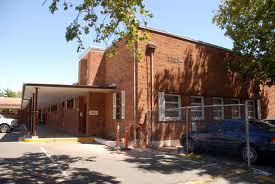
I read lately about Nuns on the Bus, a group of Catholic nuns who undertook a publicized bus tour to D.C. congressional offices, stopping at homeless shelters, soup kitchens and poverty centers to highlight the plight of the poor in America. It brought to mind the charitable instruction I received years ago from a local body of nuns at Sacred Heart School. Ours was the old Sacred Heart on 39th and H, now rebuilt across the street. The old school had, to my mind, ancient character, and was run by a Principal whose round spectacles magnified her alert and piercing eyes. When she blew her whistle everything in the schoolyard came to a stop. I can’t remember her name, only that she was called Sister Superior.
One day in the little kids’ yard populated by first and second graders, some restaurant or store donated bags of oranges and we were all presented an orange at recess. A tall girl, rumored to be a fifth grader, wandered in, darted over to a small boy and grabbed his orange. The boy began to cry. I knew him. We were in the same Arithmetic circle. I would like to have helped him but was paralyzed by the big girl who punctured the orange with her thumb and began to peel it. She put a juicy wedge in her mouth, chewed, and said, grinning maliciously at the boy, “Yummy, yummy, yummy.” This was several sins at once: first, taking something that wasn’t yours; second, taking it from someone weaker, third, gloating; fourth, talking with your mouth full. I watched, numb with fright and fascination.
Then the whistle, shrill, long,–and here she was, Sister Superior herself. She pulled her hand from her swishing volume of black robes and thrust it at the girl, palm up. The girl put the orange in the nun’s hand. “Is this how we share, Missy?” the Principal said.
“No sister,” the girl mumbled.
“Stealing from the little ones? Is this how we share at Sacred Heart?”
“No sister.”
“Go to my office, Missy, and wait for me.”
By this time other nuns had appeared and one of them escorted the big and now slumping girl to The Office. Someone else handed the Principal a fresh, whole orange which she gave to the boy whose tears had frozen in her presence. He could hardly look at her.
Later in our first grade classroom our teacher, Sister Daniel, said this was a lesson for us. She said the big girl would never do such a thing again because Sister Superior would call her parents and talk to them about Rectitude. She said Rectitude was a big word that we would study in fourth grade vocabulary, but for now, for us, it meant simply, being good and doing good. She went on. Sister Superior would also talk to the girl’s parents about the Seventh Commandment: Thou shalt not steal. It was the way the normally soft-spoken and smiling Sister Daniel said Thou. Shalt. Not. Steal. That made me hear, for the first time, the gates of Hell clanking shut.
In the second grade we had the adored Sister Monica. She was tall, young, had a round, silver pitch-pipe to keep us on key during the happy, chirping songs we sang daily. She beamed love on us. In the back of the room along the counter our class created a paper model of our neighborhood, including the school, the convent next door to it on H St., Mercy Hospital on J, Sacred Heart Church on 39th and J, houses, lawns, Frankie’s Drugs, the rectory where the priests lived, and a multitude of small poster board, colored trees. We also had a Pleasant Street and a winding, tree-dotted Sacramento Street.
We drew our own houses. Mine had a face looking out every window and one girl said it was scary, but Sister Monica said, “Oh no, its wonderful. It’s brothers and sisters,” and thereafter everyone drew the faces of their siblings in the windows. We worked eagerly on our neighborhood, coloring in the lawns and the giant, shining sun. One afternoon a boy I admired because he had had his tonsils removed handed in his house. It was more than twice the size of our other houses and appeared to have a tower of sorts. I recall staring at it in wonder. The boy put in on the little square next to the last house. It took up three squares and left no room for my friend Judy’s house, which had yet to be completed. It dwarfed the other houses and stood higher than the trees. “Its like a castle,” the boy said proudly. My house, all our careful little houses, looked shrunken next to it. His looming assemblage of paper and paste was grand but wounding; our small dwellings with siblings looking out the windows no longer seemed consequential.
Sister Monica, smiling at the boy, removed his house. She said it didn’t fit on Pleasant Street because it was so big it would block the sun and light from the other houses. She said she would teach us a new song to help explain. She blew her pitch-pipe, sang sweetly, and before long we joined in the chorus: “The sun belongs to everyone, the best things in life are free,/The moon belongs to everyone, the best things in life are free.” After that she said the big house would fit on a hill with taller trees, just as the tallest children stood in the back row for our class picture. She set the boy to work making a hill behind Frankie’s Drugs and thus Castle High Street rose in East Sacramento. Unaware of absorbing any city planning lessons from this experience, I did learn one thing: the sun belongs to everyone, the moon belongs to everyone.
The third grade was Sister Ignatius, a very old and tense person whose thick Irish brogue was hard to understand. I guessed her to be ninety or ninety-five but since she moved fast and missed nothing I saw that she was still zippy, and decided she was maybe only eighty-six. In the third week of school Sister Ignatius caught me passing yet another note, yanked one of my pigtails, and said, “I never saw the beat of you in all me life.” I didn’t know what “the beat of you” meant but it sounded bad. Then she made me sit in the desk in the far back of the room, in excruciating isolation, in the Seat of Shame. The Seat of Shame had been previously occupied only by boys and most often by one named Dennis who made gurgling turkey noises during our prayers. I was released at the end of the day and wrote no more notes that year.
Weeks later at recess we saw something strange. A man in worn clothing shuffled down 39th street. A girl said, “There goes a hobo,” and some of us ran to the fence to get a better look. He paused, turned slowly to us. He had wet eyes, a whiskery face, and a deep, bronchial cough. One of the boys said, “Hey, hobo,” but the man didn’t answer. His blear eyes fixed on something—Sister Ignatius coming from behind us, walking fast, beads clattering. We scattered but she ignored us, reached the fence and spoke to the man. Judy was close enough to hear her tell him there would be a plate for him if he went around the block to the Convent door.
That afternoon in class Sister Ignatius gave us a talk. She said we wouldn’t see too many men like that in our neighborhood. They were “wayfarers,” she said, and if we saw them we were not to talk to them. But if we saw a wayfarer when we were grown up, we were to say to ourselves, that man is my brother, and we were not to condemn, we were to help him. She said, “And if a woman is a wayfarer, and fallen away, the same thing. She is your sister.” I didn’t know what “fallen away” meant but assumed it referred to a lady hobo, an unthinkable thing, until lately, until the third grade, until I glanced back at the now gender-neutral Seat of Shame. That weekend my mother told me that one of her friends in the Mother’s Club said that Sister Ignatius and another sister with a driver’s license drove the hobo to Mercy Hospital where he was given medicine for his cough. She also said, laughing again, that Sister Ignatius was in her fifties, not so old at all, and would be around for a long time. Dismal news, this. But on Open House night Sister Ignatius met my parents, told them I was capable in Arithmetic when I paid attention, and was good in English and Spelling. She didn’t tell them I talked in line and passed notes and was the first girl ever to occupy the Seat of Shame.
This was a long time ago. I have long since parted with the Church. Sometimes there’s a sign on the lawn at Sacred Heart: Catholics Come Home. But they don’t mean me: an unbeliever, and a pro-choice feminist. Nevertheless, I remember clearly, and warmly, those early years in school. I see the Wall Street corporatists who capsized our economy getting away with it, held to no accounting at all, and I think we need Sister Superior to swoop down on them and remind them about the Seventh Commandment. A developer put up a three-story building that robbed me of back yard privacy and view; he needs to hear from Sister Monica that the view belongs to everyone. Then there are the wayfarers, more of them these days than usual for our area. One is a woman who sleeps on the side steps of the Methodist Church on J. She doesn’t panhandle for drugs or booze, and I don’t know the history of her hard life, or from what she has “fallen away.” She doesn’t want interference, or conversation. But I will help her if I can because I understand that she is my sister.
These aren’t the best of times, even for the relatively privileged. The economy limps, horrific shooting massacres occur and both presidential candidates tremble before the gun lobby, our city halts vital services yet spends half a million dollars to “study” an arena the public has voted down—leadership seems to fail at every turn. Sometimes I feel myself slipping into that defeated, intellectually easy cynicism. But then a bunch of nuns get on a bus.
It’s risky, high-profile moral lobbying. Not everyone approves. The Vatican and several bishops rebuked them for straying from doctrinal subservience. But the nuns pressed on, advocating for the people who have few advocates, the people who sleep on the steps. This is rectitude, alive and thriving. Right on, sisters.
Posted in Essays, Uncategorized
Comments Off on Rectitude
 Check Us Out On Facebook!