
Category Archives: Essays
Forty Second Street—Sentimental Journey

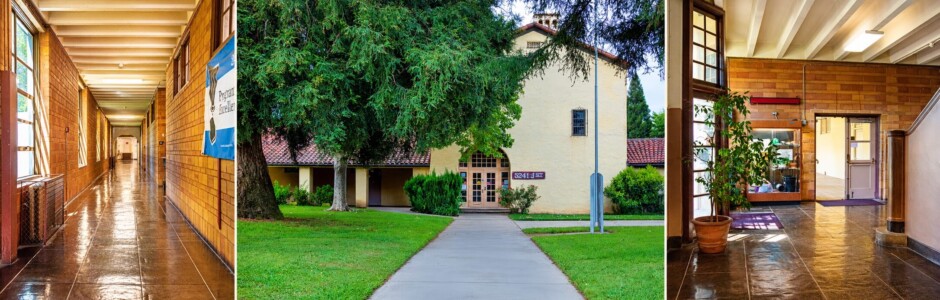
You can go home again. I’d often passed the house on 42nd street and wondered who lived there now. Contractors and carpenters had plainly been at work because the place had had a magical face-lift, the kind I want. Then came the invitation. A City Council candidate would speak there. We arrived early. The exterior features of the place were hugely improved, but I knew in thirty seconds that its pulse remained the same. It felt the same–airy and bright; kids ran in and out. I glanced at a door in the hall. When we lived here that would have been the Dorm. A memory came, as real as today.
In the Dorm, in two sets of bunk beds, slept Pat, Kathleen, Moira and Sheila. Our toddler bother, Danny, had a little bed in our parent’s room. Moira, whose curly red hair fluffed up like Little Orphan Annie’s, had a top bunk. This particular night she woke in the dark and saw in the moonlit window the face of a woman. The woman stared into the room. She had black hair, wore a ragged, black coat, had a pale, sunken face and smoldering, black, black eyes. Her teeth were yellow, lips black. Her fingernails were black. She closed and opened her mouth slowly, over and over.
In the morning Moira burst with the story. Our mother, vastly pregnant, listened while pouring orange juice. The rest of us gazed at Moira, then at one another. Sheila asked, “Who was that bad lady, Mama?” Our mother said Moira had had a nightmare. Moira shook her head. No, she was wide awake. We ran into the bedroom to see where it had happened. Our mother came too, adding importance to the investigation, and tested the window lock. Everything worked, so she returned to the kitchen. We ran outside to look for footprints. By the window lay a strip of weedy ground between our house and the Toniola’s fence next door. Kathleen found the prints, odd indentations in the dirt. “Boots,” Kathleen said. “Pointy boots.” We ran back in to tell our mother. She listened, then said solemnly, “Ah. It must have been a secret, black and midnight hag.” I remember the chill the words brought: a secret, black and midnight hag. Sheila said immediately. “A witch.”
This set us on a mission. What do you do when a witch looks in your window at night? You feed her. I don’t remember whose idea it was to bribe the witch by setting out a feast, but it seemed brilliant. And the witch was hungry. Why else had she opened and closed her mouth so often? We found a cracked plate in the garage. Witches like horrible things, so Kathleen scooped handfuls of wormy dirt onto the plate. We cast about for more disgusting items. Sheila found curled-up lemon peels from the trash under the sink. We headed down the street. Kathleen had to carry the plate now because I didn’t like holding something that had worms moving in it. The Stevenson kids joined us and provided a red wagon, so now the plate could be wheeled. Mrs. Stevenson said, “A witch pie?” and poured a cold cup of coffee over the dirt to give it mushiness. “Now you can knead it,” she said.
It was Moira’s shining day. She repeated the story and with each telling the yellow witch canines grew longer and more wolfish, the black eyes bigger and blacker. I held Danny’s hand as he hurried along because Moira, who usually performed this office, had risen in stature and now walked at the head of our small procession. We wound around the block, picking up anything unsightly and inedible. When we got to Warner’s Market Kathleen found a popsicle stick with a glob of ants on it. Into the pie it was thrust. My friend, Mark, ran to join us. He said, “This is the greatest mean pie I ever saw.” We came to a stop. Kathleen looked down. Dried, whitish dog poop. “No,” I said. Kathleen said we had to give the witch what she wanted. Using twigs, she scraped the poop onto a withered, cracking leaf, lifted it slowly. We watched with near reverence. She dropped the serving into the pie. I’d lifted Danny up so he could see the whole thing. His pale blue eyes filled with wonder. “She’ll love this,” Kathleen said.
It was a good day. We brought the pie back to the window, carefully set it on the ground. Moira told Mark how hungry the witch was and how her black eyes were filled with fiery spit. When our father came home he said the witch had met her match in the kids of 42nd street. So yes, a good day, but a bad night because our mother made us all take baths. We vowed to stay awake for the return of the witch but nobody made it. In the morning we raced outside to the window. The plate was gone. In its place lay an X–two crisscrossed sticks, a broken crow feather nearby. We flew into the kitchen, dragged our mother out to see. She said with great seriousness that this was a thank you from the witch. It meant no witch would ever again bother any of the children of 42nd street or any other children for miles around. “You kids have saved the whole neighborhood,” she said.
This house. Here’s where our parents drove to Mercy Hospital, our father returning alone. He said when our mother came back she would bring our new baby, another boy, named Michael. Everybody clapped. Here’s where our mother started the family Mardi Gras: the day before Lent began we got to have ice cream and candy, all we wanted. Every Mardi Gras we turned on the phonograph and jumped around in a sugar-induced frenzy. This is the house where she taught us the Bunny Hop and we “danced” in a crooked cavalcade from room to room and out into the yard, falling down, laughing. Even grumpy Mr. Freligh, who said Halloween was invented by Irish hooligans who lived for mischief, laughed at the bunny hop.
When we lived here Kathleen staged an outdoor puppet show between the apricot tree and the clothesline in the big back yard, and I began digging a hole to China near the hydrangeas. The Easter Bunny and Santa came to this house every year, and after a time the Tooth Fairy began showing up. From this house we walked to Sacred Heart School, and to this house we brought our books from McKinley Library. Something was always going on; there were always running feet and excited voices. But in this house you could climb to the top bunk and quietly read all of Louisa May Alcott’s and Mark Twain’s books, and more, always more, through those long, delicious summers.
Now, so many years later, I stroll out to the long back yard. Kids of different sizes scurry around. There’s a big, peaceful dog. A bright, enthusiastic eight-year-old named Lily fills me in on things. As noted, the pulse of the house beats true. I tell Lily that the back yard next door used to be a giant garden, covered with vines, towering corn, vegetables of every kind. We called it The Jungle. Almost weekly in the summer and fall Mr. Toniola would bring our mother armloads of fresh produce, and she would laugh and thank him and tell him the kids had no idea how lucky they were. Looking over where Mr. Toniola’s yard had been, a different recollection surfaced. I was in college, reading Macbeth, and discovered the phrase, “secret, black and midnight hags.” How much lore and language had our mother given us, and we not realized it?
I went back inside to thank the present owners and say good bye. A final memory. Six years after Michael’s birth another baby, a surprise, came home from Mercy hospital. It was a girl, Eileen. We sat on the couch in birth order, and the baby was handed down to each one of us, from me to Michael. She was so little and she had hardly any hair. We loved her utterly, from the start. She was the only good thing that happened that week. Five days later we moved to the suburbs and left the little house forever.
Pat Lynch
Posted in Essays, Uncategorized
2 Comments
Testimony
 by Pat Lynch
Councilman Steve Cohn paid a friendly visit to an ESPNA meeting the other night. During a civil exchange about McKinley Village (a toxic development that will force ruinous traffic unto our streets) one citizen noted that both a physicians’ organization and an environmental organization opposed the project.
Cohen replied that he was a lawyer, not a scientist, and said it was often hard to credit scientific testimony because expert witnesses could be summoned to refute it. A fair point.
But wait. Wait, wait, wait..
Don’t we all have an obligation to acquire at least some scientific literacy? Isn’t that part of critical thinking? For example, I am persuaded that the earth is round, that human origins are African, that smoking can cause cancer, that global warming exists, that particulate matter in the air can cripple lung function. This is common scientific knowledge, or should be.
Then there’s Barry Schenk, the famed lawyer who, with Peter Neufeld, founded the Innocence Project. This worthy legal organization used DNA science to exonerate wrongly convicted prisoners; eighteen have so far been released from death row. Now this is an instance of a lawyer embracing science to secure justice. It is truly admirable and my guess is that Steve Cohn would agree.
On my block lives a man whom I will call Shane because that’s the kind of name he would like to invent for himself. Shane, in his sixties now, likes right-wing physicist Richard Muller who vociferously disputed global warming. Shane also scorns regulation, thinks he is a survivalist, promises frequently to join his own kind in the mountains but never does. When I first met him he told me he was building a bunker to guard his provisions from the advance of “the mud people.” So now you know. He hates Project Innocence and says DNA is a “bunch of hippie, liberal crap.” So take that, Ancesry.com.
We used to get into arguments but now I try to pretend he isn’t there, which is hard because he’s a compulsive monologist and sits on his front porch talking loudly on the phone to his fellow doomsday preppers. Every year he burns wood and some kind of horrific cheap plastic-smelling junk in his fireplace. The smoke from his chimney fills the street with a broth of gray ooze. Somebody reported him. Somebody else left an air quality leaflet on his porch. He thinks I did it, but I didn’t. However I say to the person I suspect is responsible, Thank you, brother.
Now Shane talks pointedly when I pass by. “Got some snitches on the block,” he says. Once he held up a newspaper photo of a big blizzard back east. “That global warming’s giving everyone the shivers,” he boomed. After this he emitted a prolonged nasal chuckle that is one of the most irritating sounds on this planet.
But next, falling from he sky—a revenge miracle. His science pet, Richard Muller, conducted his own study and became a “converted skeptic.” “Global warming (is) real,” Muller famously stated. “Humans are almost entirely the cause.”
Now when chatting on the street with neighbors I straighten up when Shane is near and say, with great precision, “How about that Richard Muller?” It confused the neighbors at first but they’re getting used to it.
I’m not suggesting in any way that our councilman is like our survivalist. In fact, Shane does not like our councilman and speaks of him with an astonishing panoply of aspersions.
But I am saying that all science is not equal. The physicist who denied global warming was wrong because he had come to conclusions without testing, evidence or experimentation. Bad science. But when he employed the traditional and scrupulous scientific method he came to the right conclusion. Good science.
ECOS and Physicians For Social Responsibility (the groups with such misgivings about McKinley Village) are reputable organizations. Nobody is paying them for an opinion. I hope Steve Cohn considers this. He is an educated man and can certainly exercise rational judgment when presented with what appears to be conflicting scientific information.
And we know from its DEIR that bogus analysis and defective reasoning are part of the pro-McVillage presentation. I hope that is considered as well.
One night while I was trying to watch Cosmos Shane strolled our side of the street talking on his cellphone. It was loud. It was incessant. I know, I know—practically every block has a nut-case. But this particular evening it was acutely annoying. Sometimes it’s enough to make you write your councilman.
Posted in Essays, Uncategorized
1 Comment
 Check Us Out On Facebook!